

ICON laser hair reduction uses light absorbed by the pigment in a hair to heat and disable the follicle, while a chilled tip protects the surface. Coastal Dermatology + Aesthetics performs it at its San Luis Obispo office on the face, underarms, bikini area, legs, back, chest and arms. It takes a series of sessions.
What laser hair reduction does
The laser finds the pigment in your hair, follows it down to the follicle, and heats it until that follicle stops producing. A chilled glass tip sits against your skin and cools it before and after every pulse, which is why the follicle underneath takes the energy and the surface does not. Most people describe the pulse as a rubber band snapping, and then it is over.
It works on hair you have been shaving, waxing or threading for years, and it works on the areas where that gets tedious: underarms in fifteen minutes, a bikini line, a chin, a back. What it gives you back is not really smooth skin. It is the twenty minutes a day you were spending on it, and the freedom to stop planning around it.
Most people stay hair free for months or even years. [1] Anything that does find its way back comes in finer and lighter than what you started with, and an occasional maintenance session keeps it that way.
What laser hair reduction is good at
- Underarms, which take about fifteen minutes and are the area people are gladdest they did
- Bikini line and legs, where the time saved adds up fastest
- Facial hair on the chin, upper lip and sideburn area
- A back or a chest, where shaving is genuinely impractical
- Reducing ingrown hairs and the irritation that comes with shaving coarse hair
- Fitting into a normal day, because there is nothing to recover from
How much of the hair goes after the first treatment. It is a series for a reason, and knowing the number up front is what makes the wait an easy one. [1]
How treatment works
Cold glass, then the pulse
A smooth glass tip is chilled and held against your skin. It cools the area before the pulse and again after it, so the surface stays comfortable while the energy goes where it is meant to. You feel a brief snap and a flash of heat.
The follicle absorbs it
The light is absorbed by the pigment in the hair itself, travels down the shaft, and heats the follicle at the root. Skin without a hair in it barely registers the pulse. That is the whole principle, and it is also why hair color matters more here than almost anywhere else.
You come back, because hair grows in shifts
Only the follicles actively growing at that moment can be treated, and your hair is never all in that phase at once. That is the entire reason this is a series rather than a single appointment. Each session catches a different shift. The usual range is two to six treatments. [1]
Treatments most patients need, spaced to catch hair at different points in its growth cycle. Anybody quoting you one session is describing a different outcome. [1]
How to plan your course around your year
You can start this any month you like, and people do. What changes month to month is how easy it is to keep the schedule, because the laser works by finding the pigment in your hair and untanned skin gives it the clearest run at it. So a little planning gets you a smoother course and a faster finish.
The preparation is the whole of it: skip the tanning, indoors and out, skip the sunless tanner, and wear broad-spectrum SPF 30 or higher daily. [2] Easy to do in any season on the Central Coast, and easiest of all in the months your legs and underarms are covered anyway.
| When | What is happening |
|---|---|
| September to November | The smoothest run at it. Summer color has faded and the areas being treated are covered anyway, so nothing interrupts the schedule. |
| Through the winter | Sessions spaced weeks apart, catching different growth cycles. This is the stretch that does the work. |
| Spring | Later sessions land. You are already noticeably ahead of where you were. |
| Summer | The point of the whole exercise. Sunscreen daily, and hold off on new sessions if you have caught sun. |
| Any month you like | Plenty of people start in spring or summer and do beautifully. It just takes a little more care with sunscreen between sessions, and we will build the schedule around your plans. |
The practical version: whenever you start, the sooner you start the sooner you are finished with it. Tell us what is on your calendar and we will space the sessions around it.
Areas we treat
Underarms
About fifteen minutes, and the area people are gladdest they did first.
Bikini area
The external bikini line, where the time and irritation saved add up fastest.
Legs
Lower leg or full leg, the longest appointment and the biggest change to a routine.
Face
Upper lip, chin and the sideburn area, treated carefully and in smaller sessions.
Back and chest
Larger areas of coarse hair, where shaving is genuinely impractical.
Arms
Forearm or upper arm, where the goal is usually reduction rather than clearing.
Real results
Before & after
These are our own patients, photographed at our San Luis Obispo office and published with their consent. Individual results vary. There are more in the practice’s private gallery, and we are happy to show you cases similar to yours at your consultation.
Individual results vary. Photos shown are unretouched patients of Coastal Dermatology + Aesthetics, published with consent.
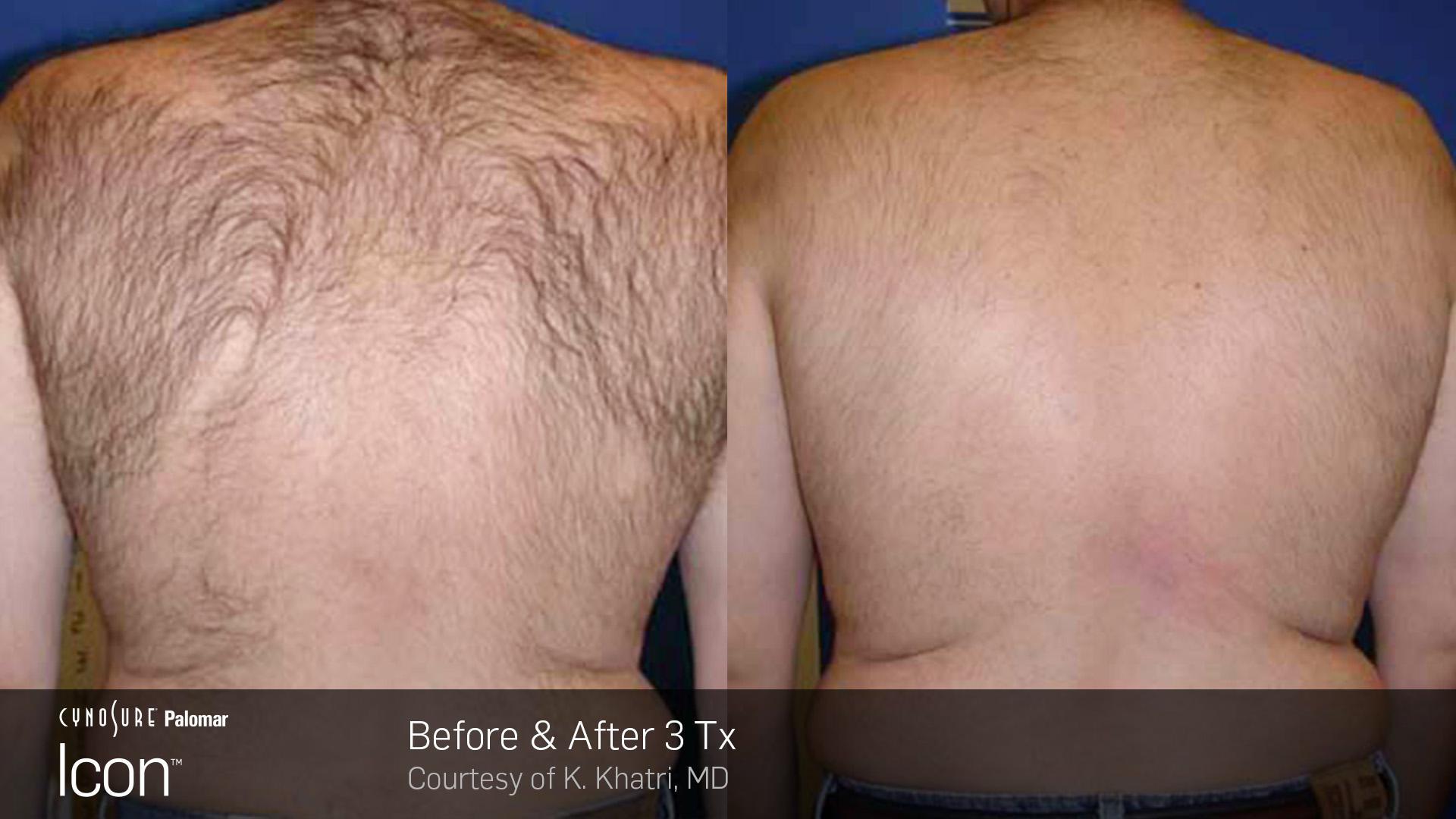

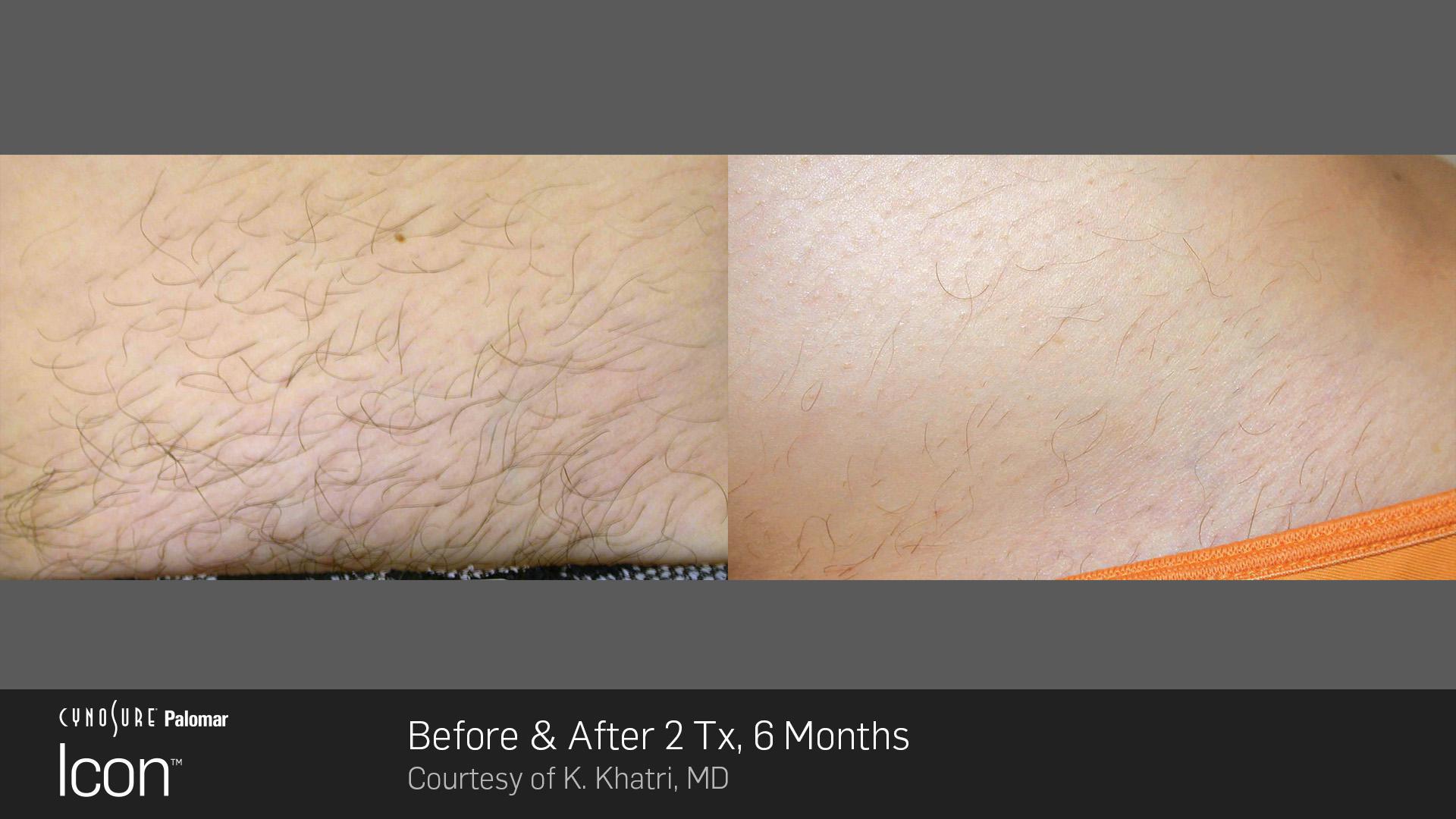
How long most patients stay hair free, and anything that does return comes back finer and lighter than it was. [1]
Best experience of my life! Helpful and take care of me on the spot!

The Coastal difference
Settings chosen for your hair, not for the average
Laser hair reduction is sold almost everywhere now, and the machines are broadly similar. What differs is who chooses the settings. Here that happens inside a board-certified dermatology practice, where your skin tone and your hair color are assessed properly and the settings are built around them rather than around an average of everyone who walked in that week.
That is what gets you a better result in fewer sessions. Deeper skin tones can be treated very effectively, and advances in the technology have made that possible in experienced hands. [1] Lighter, gray and red hair give the laser less pigment to work with, and you will hear an honest read on that at your consultation, along with what will get you where you want to go.
Is it right for you?
Laser hair reduction is probably a good fit if:
- You have dark hair you are tired of managing, anywhere on the face or body
- You want the time back more than you want a cosmetic change
- You can commit to a series spaced over months rather than one appointment
- You can stay out of the sun and off self-tanner while you are having it
- You would rather have your settings chosen by a dermatology practice than by a franchise
We will steer you somewhere else if:
- Your hair is very light, gray, white or red, where a different approach will serve you better
- You are tanned right now, fresh or from a bottle, which needs to fade first [2]
- You are taking or recently finished isotretinoin, or another medicine that changes how your skin reacts to light [2]
- There is an active skin infection or broken skin in the area
- You are pregnant
Not sure which of these you are? That is what the consultation is for. Hair color is the one thing worth checking before you plan a course around it.
What to expect afterward
Expect the treated area to look a little pink and feel warm, like mild sunburn, for a few hours. A cold compress goes on before you leave. There is no real downtime and most people go straight back to whatever they were doing. Over the following week or two, treated hairs work their way out on their own, which can look like regrowth and is not.
Afterward, do
- Let the treated hairs shed on their own over the next week or two
- Shave between sessions if you want to, because shaving leaves the root alone
- Wear broad-spectrum sunscreen, SPF 30 or higher, on treated skin every day [2]
- Keep your sessions on schedule, because the spacing is set by the growth cycle
Afterward, don’t
- Wax, pluck or thread between sessions, because those remove the exact thing the laser is aiming at
- Tan, use a tanning bed, or use a sunless tanner at any point during your course [2]
- Take a very hot shower, sit in a sauna or work out hard for the rest of the day
- Assume patchy regrowth means it failed, because different follicles wake up at different times
Call us about anything severe, worsening or surprising: blistering, a burn, real pain, signs of infection, or any lightening or darkening of the skin. We would far rather hear from you early.
Concerns treated
One concern, treated properly. Pick it to see how we approach it.
What treatment costs
Laser hair reduction is priced by the area and by the number of sessions, and because it is always a series, the number that matters is the course rather than the visit. A small area like an upper lip and a large one like a full leg are not remotely the same appointment, and areas are often bundled when they are treated together.
You get the cost of the whole course at your consultation, along with a realistic session count for your hair and your skin, rather than a per-session price that adds up quietly across a year.
Treatment time
15 to 30 minutes for most areas, longer for legs or a back
Downtime
None. Some redness and a warm flush for a few hours
Results appear
Progressively, across the series rather than after one visit
Results last
Months to years, and some hair returns finer and lighter
Laser hair reduction frequently asked questions
An underarm, start to finish, with nothing to recover from afterward. It is the appointment people are gladdest they finally booked. The planning guide above shows you how to plan the rest of the course. [2]
Offered at
Ready to start? Request your consultation
Fill out the form below, book online in Santa Maria (opens online scheduler), or give us a call. Cosmetic and aesthetic appointments need no referral. For medical dermatology in San Luis Obispo, we are accepting new patients by referral from your primary care physician; send the referral across and then use the same form. In Santa Maria, medical appointments are available without a referral for PPO patients, and for HMO patients we are in-network with Santa Maria Physician's Choice.
A consultation fee of $125 is due at the time of booking.
Sources and medical review
1. American Academy of Dermatology Association. “Laser hair removal: FAQs.” States that “most patients need 2 to 6 laser treatments,” that “you can expect a 10% to 25% reduction in hair after the first treatment,” that “most patients remain hair free for months or even years” but “some of the hair regrows” and is “finer and lighter in color,” that maintenance treatments may be needed, that the treatment “works best for patients with light-colored skin and dark-colored hair” while advances now allow treatment of light hair and dark skin, that it “generally does not require any real downtime,” and to “choose a board-certified dermatologist to perform laser treatments.” https://www.aad.org/public/cosmetic/hair-removal/laser-hair-removal-faqs · Medical Organization
2. American Academy of Dermatology Association. “Laser hair removal: Preparation.” “Do not tan (outdoors and indoors),” “Do not use sunless tanners,” apply sunscreen “broad-spectrum, SPF 30+, and water-resistant” every day before going outdoors, and tell your dermatologist if you have taken isotretinoin or any other medicine. https://www.aad.org/public/cosmetic/hair-removal/laser-hair-removal-preparation · Medical Organization
3. U.S. Food and Drug Administration. 510(k) Premarket Notification K142376, Palomar Icon Aesthetic System, Cynosure, Inc., cleared 24 September 2014. Clears the 1064 laser and the Max IPL handpieces for hair removal, among other indications. https://www.accessdata.fda.gov/cdrh_docs/pdf14/K142376.pdf · Regulatory
Content on this page is for educational purposes and is not a substitute for professional medical advice. ICON™ is a trademark of Cynosure Lutronic, Inc. This is hair reduction rather than permanent hair removal; some hair regrows and maintenance treatments may be needed. Redness, swelling and a warm sunburned feeling in the treated area are expected and settle within hours. Blistering, burns, scarring, and lightening or darkening of the skin are uncommon but possible, and the risk rises on skin that is tanned or sunburned at the time of treatment and on skin that carries more pigment. Very light, gray, white and red hair respond poorly. Tell us about any medicine that makes your skin sensitive to light and about isotretinoin taken now or in the past year. This treatment is not suitable during pregnancy or where there is an active infection or broken skin in the area. Individual results may vary. A consultation fee of $125 is due at the time of booking.