

Contact dermatitis is an itchy rash caused by something touching the skin. There are two kinds: irritant contact dermatitis, where a substance injures and irritates the skin, and allergic contact dermatitis, where the immune system reacts to a specific substance. It is diagnosed and treated at Coastal Dermatology + Aesthetics in San Luis Obispo.
Two conditions with one name, and the delay tells you which
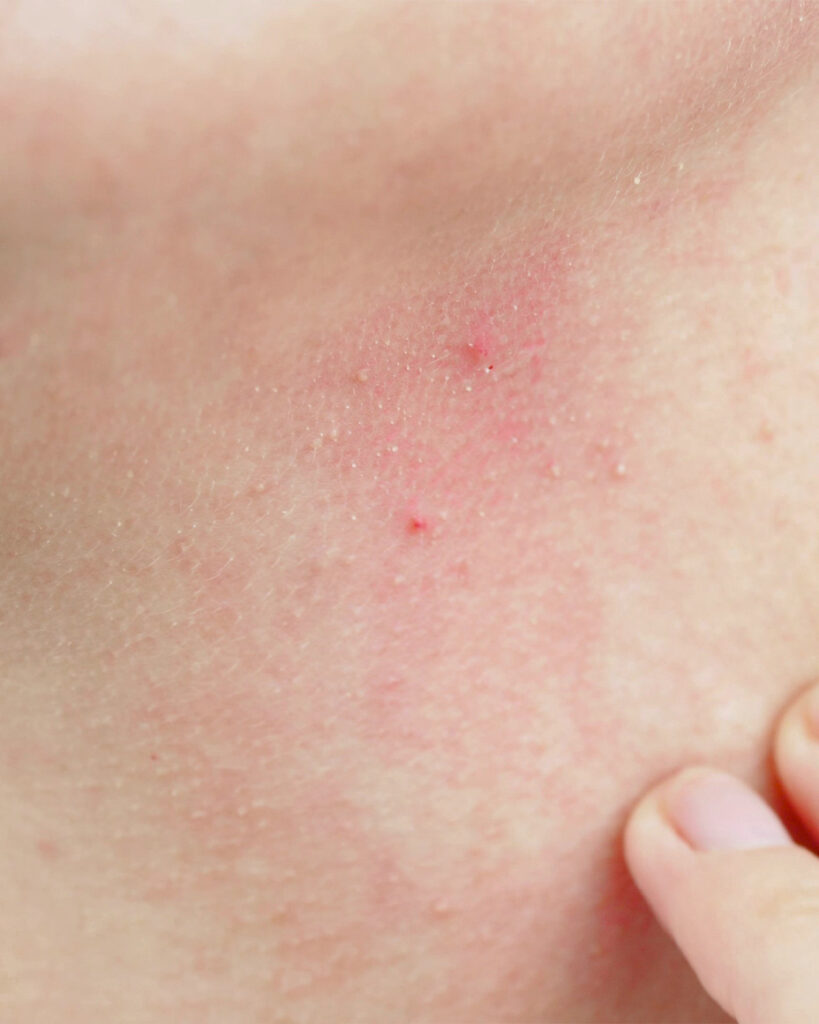
Contact dermatitis is what happens when something your skin touched leaves a rash behind. It comes in two kinds, and the difference is not cosmetic. It changes what caused it, how long it took to appear, and what you do next.
Irritant contact dermatitis is direct damage. Something injures the skin and then irritates it. [1] No allergy is involved, so anyone who touched enough of it would react the same way. Detergents, bleach, hand sanitizer, soaps, gasoline, disinfectants, fertilizers, pesticides and even fruit juice all do it. [1] This is the kind that turns up on hands that stay wet all day.
Allergic contact dermatitis is an actual allergy. Your immune system has learned to react to one specific substance and now reacts every time it meets it. [1] Because the immune system has to process the substance first, it can take hours or days before the rash appears. [1] That delay is the single most useful clue you have, and it is why so many people go looking through everything they used that morning when the culprit was two days ago.
What it looks and feels like [3]
- Itchy skin, often intensely so
- A rash where the skin is discolored, swollen and hot
- Skin that is excessively dry and may crack
- Tenderness, burning or stinging
- Hives, meaning round welts that itch intensely
- Fluid-filled blisters
How long the allergic kind can take to appear after the contact, because your immune system has to process the substance before anything shows on the skin. [1] The irritant kind does not wait. That gap is the clue.
What causes it
The five that cause most allergic reactions
The most common allergens are nickel, fragrance, balsam of Peru, latex and urushiol. [1] Nickel turns up in jewelry, watch backs, snaps, buckles and phones. Fragrance is in most personal care products. Balsam of Peru is in cosmetics and in some foods. Urushiol is the oil in poison ivy, poison oak and poison sumac, which on the Central Coast is the one worth knowing by sight.
The things that irritate anybody
Detergents, bleach, hand sanitizers, soaps, gasoline, disinfectants, fertilizers, pesticides, plants and fruit juice. [1] These do not need an allergy. They strip the skin barrier, and enough exposure will do it to anyone, which is why this kind clusters in particular jobs and particular routines.
Why it can start after years of no trouble
An allergy is learned. You can use a product happily for months or years and then become allergic to it, and the first exposure often does nothing at all. That is normal for this condition rather than a sign that something changed about the product. It is also why “I have always used this” is not evidence that a product is in the clear.
Substances that can cause an allergic skin reaction, which is why finding yours by guesswork is hard and why a dermatologist asks about your job, your hobbies and your routine rather than just looking at the rash. [2] [4]
Where the rash landed usually names the cause
Where the rash appears is often your biggest clue. [4] Shape helps too. A band around a wrist, a rectangle where a bandage sat, a stripe down one side of the face. Here is what each location most often points at.
| Where the rash is | What it most often points at [4] |
|---|---|
| Around the eyes | Skin care, makeup, a makeup sponge or remover; metal on tweezers, an eyelash curler, keys or a doorknob; nail polish or artificial nails |
| One side of the face | A cell phone, shampoo or conditioner, or hair color and perming solution |
| Lips | Lipstick, lip balm or lip gloss, a musical instrument, or an e-cigarette |
| Lips and one hand together | An e-cigarette, which often contains nickel |
| Under jewelry or glasses | Nickel, brass or palladium in jewelry; metal frames or the plastic parts of eyeglasses and sunglasses |
| Legs | Dyes or fabrics in clothing, fragrance in skin care, or contact with plants including poison ivy and poison oak |
| Feet | Shoes or socks, foot cream, scrubs or nail polish, or a medication, powder or deodorant |
| Hands, both of them | Usually the irritant kind: soaps, sanitizer, cleaning products, or hands that stay wet [1] |
That map narrows it. It does not close it, because more than 15,000 substances can cause an allergic skin reaction. [4] Where the pattern is not obvious, or where a rash keeps returning, patch testing is the test that names it: small amounts of allergens taped to your skin for 48 hours, read on removal and again after four to seven days, because it takes time for a reaction to develop. [5]
Where it shows up
| Area | What tends to be behind it |
|---|---|
| Hands | The most common site of the irritant kind, and the one that follows people to work every day. |
| Face and eyelids | Thin skin that reacts to products applied elsewhere, including in the hair, and to whatever the hands have touched. [4] |
| Wrists, ears and neck | Jewelry and watch backs, where nickel is the usual answer. [1] |
| Forearms and lower legs | Where poison oak makes contact on a Central Coast trail, in the shape of the brush you walked through. |
| Waist and abdomen | Snaps, buckles and the metal button inside a waistband. [1] |
| Feet | Shoes, socks and what has been applied to them. [4] |
Crissa is a wonderful addition to the practice, can’t wait to return.
The Coastal difference
The rash is the easy part. The cause is why you come in.
This gets called eczema, a fungal infection, psoriasis, rosacea or plain sensitive skin, and every one of those is handled differently. Telling them apart is what a board-certified dermatologist is for, and it is also what stops another month of drugstore hydrocortisone on something that was never going to respond to it.
The other half of the appointment is the history. The visit is exactly that: the rash examined carefully, and questions about your health, your job, your hobbies and your everyday activities. [2] That is not small talk. With more than 15,000 possible allergens, the conversation is the diagnostic tool, and at our San Luis Obispo office it is the appointment rather than a formality before it.
The best way to treat contact dermatitis: avoid what is causing it, and the rash and symptoms go away. [2] Which is why naming the cause is worth more than any cream.
When to see a dermatologist
Book an appointment if:
- An itchy rash will not clear, or clears and then comes back [4]
- You cannot work out what caused it
- The rash keeps returning in the same place
- Over-the-counter hydrocortisone has not done much after a week or two
- Your hands are affected and your job keeps them in water, gloves or cleaning products
- You want to know whether it is contact dermatitis at all, since several conditions look alike [4]
Get seen promptly if:
- The rash is spreading quickly, or blistering badly
- It involves your eyes or your mouth
- It comes with a fever, or with any trouble breathing
The rule of thumb is short: if you cannot get rid of the itchy rash, or it returns, it is time to see a board-certified dermatologist. [4]
Living with it
Once the cause has a name, most of this becomes straightforward. While the rash is active, the goal is to stop adding to it.
Worth doing
- Cut back to a short, boring routine while skin is flared: plain cleanser, moisturizer, sunscreen, and nothing else
- Cool compresses for the itch [2]
- Wash skin, clothes, tools, gloves and the dog after any poison oak contact, because it is the oil left behind that keeps spreading it, not the rash itself
- The right gloves for the job, and dry hands in between
- A barrier-first routine for a few weeks after a flare, while skin that has been irritated repeatedly settles down
Worth knowing
- Contact dermatitis is not contagious. It is your own skin reacting to something it touched
- Poison oak blister fluid does not spread the rash. Unwashed oil on skin, clothing or a pet does
- Actives, fragrance and scrubs keep an irritated barrier irritated. They can go back in later
- An allergy is learned, so a product you have used for years is not automatically innocent
- Skin that has flared repeatedly stays reactive for a while afterward and settles with time
Treatments we offer
Identifying the cause, treating the flare, and settling the skin afterward. Pick a treatment to see how it works.
What treatment costs
Diagnosis and treatment of contact dermatitis are medical care rather than a cosmetic service, and are handled differently from the aesthetic treatments on this site. Our office will go through what applies to you when you book.
Where allergy patch testing is the right next step, we will explain what it involves and where it is done before anything is arranged.
The two kinds
Irritant, where something injures the skin, and allergic, where the immune system reacts [1]
The timing clue
The allergic kind can take hours or days to appear after contact [1]
How it is diagnosed
A dermatologist examines the rash and asks about your health, job, hobbies and daily activities [2]
What works best
Avoiding the cause. Find it and the rash and symptoms go away [2]
Contact dermatitis frequently asked questions
How long allergy patch test patches stay on the skin, with a second reading four to seven days later because a reaction takes time to develop. [5] It is the test that turns “something is causing this” into a name.
Offered at
Rash that will not clear? Request an appointment
Fill out the form below, book online in Santa Maria (opens online scheduler), or give us a call. Cosmetic and aesthetic appointments need no referral. For medical dermatology, we are accepting new patients by referral from your primary care physician; send the referral across and then use the same form.
Sources and medical review
1. American Academy of Dermatology Association. “Eczema types: Contact dermatitis causes.” States that “when something injures and then irritates your skin, it causes this type of contact dermatitis,” describing irritant contact dermatitis, and that “if what touches your skin causes an allergic reaction, you develop this type of contact dermatitis,” describing allergic contact dermatitis. States that with the allergic type “it can take hours or days before you develop a rash and symptoms” because the immune system must process the allergen first. Names detergents, bleach, plants, fruit juice, hand sanitizers, soaps, gasoline, disinfectants, fertilizers and pesticides as “just a few of the many things that can irritate your skin,” and names nickel, fragrance, balsam of Peru, latex and urushiol, the oil in poison ivy, poison oak and poison sumac, as the most common allergens. https://www.aad.org/public/diseases/eczema/types/contact-dermatitis/causes · Medical Organization
2. American Academy of Dermatology Association. “Eczema types: Contact dermatitis diagnosis and treatment.” States that a dermatologist will “examine your rash(es) carefully” and “ask you questions about your health, job, hobbies, and everyday activities, when necessary,” that “the best way to treat contact dermatitis is to avoid what’s causing it. If you can avoid the cause, the rash and symptoms will go away,” names topical medication and medication that works throughout the body for symptom relief, and names cool compresses for itching and calamine lotion or colloidal oatmeal baths for weeping sores. https://www.aad.org/public/diseases/eczema/types/contact-dermatitis/treatment · Medical Organization
3. American Academy of Dermatology Association. “Eczema types: Contact dermatitis signs and symptoms.” Names itchy skin, often intense; a rash where skin is discolored, swollen and hot; excessively dry skin that may crack; tender skin; burning or stinging; hives, described as round welts on the skin that itch intensely; and fluid-filled blisters. https://www.aad.org/public/diseases/eczema/types/contact-dermatitis/symptoms · Medical Organization
4. American Academy of Dermatology Association. “Itchy rash could be contact dermatitis.” States that where a rash appears “often provides your biggest clue,” and sets out likely culprits by location: around the eyes, skin care product, makeup, makeup sponge or remover, metal on tweezers, an eyelash curler, a doorknob or keys, and nail polish or artificial nails; on one side of the face, a cell phone, shampoo or conditioner, or hair color or perming solution; on the lips, a musical instrument, lipstick, lip balm or lip gloss, and e-cigarettes; on the lips and one hand, e-cigarettes, which “often contain nickel”; beneath jewelry or glasses, nickel, brass or palladium, and metal frames or plastic parts; on the legs, clothing dyes and fabrics, fragrance in skin care products, and certain plants including poison ivy; on the feet, shoes or socks, foot cream, scrubs or nail polish, and medications, powders and deodorants. States that “with more than 15,000 allergens, it can be difficult to find what’s causing a rash,” and that “if you cannot get rid of the itchy rash or it returns, it’s time to see a board-certified dermatologist.” https://www.aad.org/public/everyday-care/itchy-skin/rash/itchy-rash-contact-dermatitis · Medical Organization
5. American Academy of Dermatology Association. “Patch testing can find what’s causing your rash.” States that where a dermatologist suspects an allergic reaction, “your dermatologist will place small amounts of allergens on your skin and cover each allergen with a patch,” that “you will leave the patches on your skin for 48 hours,” that the patches are read on removal and again “after 4 to 7 days” because “it can take time for your skin to develop an allergic reaction,” and that “more than 15,000 substances can cause an allergic skin reaction.” https://www.aad.org/public/diseases/eczema/types/contact-dermatitis/patch-testing-rash · Medical Organization
Content on this page is for educational purposes and is not a substitute for professional medical advice, diagnosis or treatment. Not every rash is contact dermatitis, and several conditions look alike. The location guidance on this page narrows the possibilities and does not identify a cause; only an examination, and where appropriate patch testing, can do that. Seek care promptly for a rash that is spreading quickly, blistering badly, involving the eyes or mouth, or accompanied by fever or difficulty breathing. Individual results may vary.