

Hyperhidrosis is a treatable medical condition that causes the body to produce more sweat than it needs to cool itself. It most often affects the underarms, palms, soles, scalp and face. It is diagnosed and treated at Coastal Dermatology + Aesthetics in San Luis Obispo.
A condition, with a name and a treatment sequence
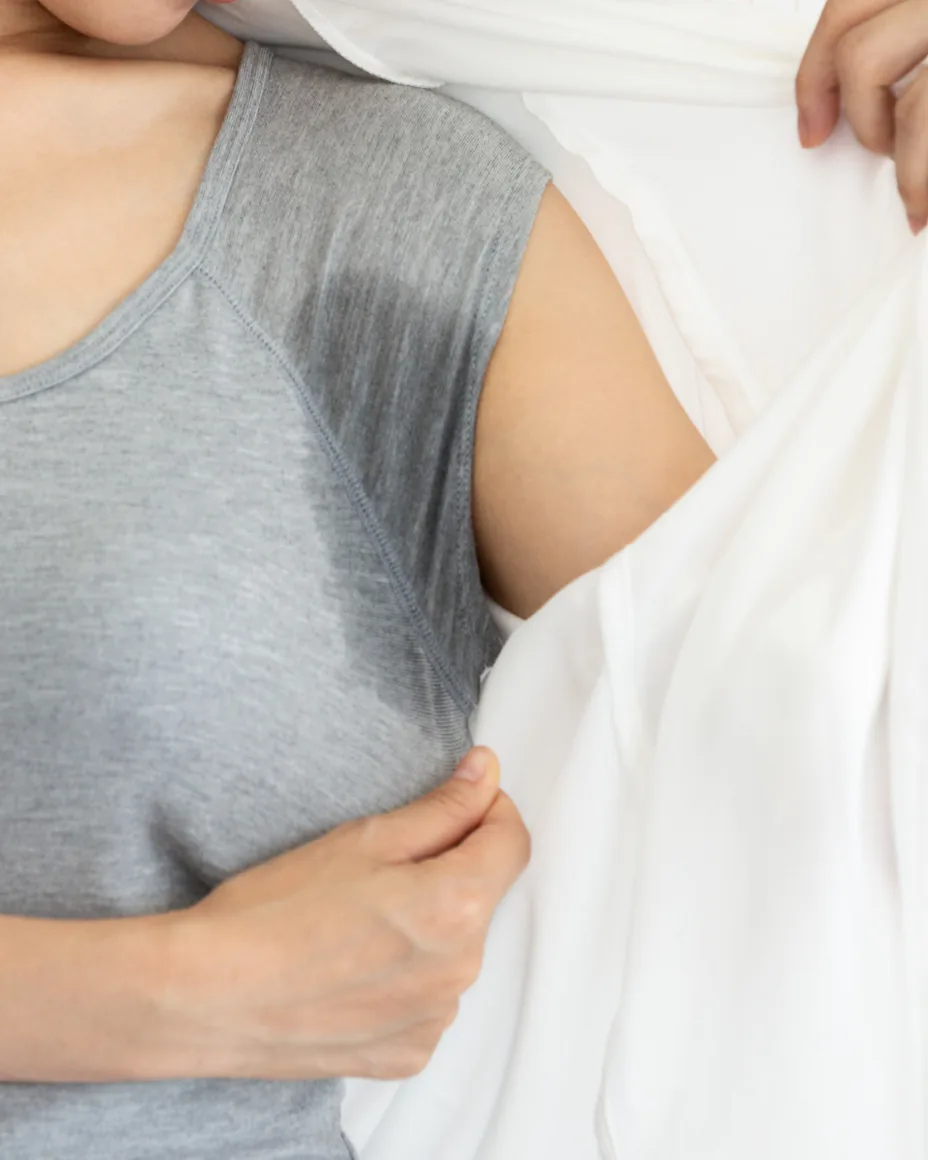
Hyperhidrosis is a medical condition that causes the body to produce more sweat than the body needs to cool itself. [1] It is treatable. [1] That is the whole of the framing, and it matters because most people arrive at this page having spent years treating it as a personal failing rather than as something a doctor addresses.
The primary form affects the underarms, palms, soles, scalp and face, usually starting in childhood or adolescence. [2] It stops while you sleep. [2] The secondary form causes heavy sweating over most of the body, can wake you at night, and is driven by a medication or another condition. [2] [3] That distinction is the first thing an appointment establishes, because it changes what gets treated.
The consequences are real and they are rarely asked about: sweat visible on skin or on clothing, sweating that interferes with everyday things like shaking hands or writing, body odor, soft skin that may peel, chafing or frequent skin infections, and feeling embarrassed, frustrated or insecure. [2] The last one is a symptom rather than an overreaction, and it is a legitimate reason to treat.
What tends to set it off [2]
- Hot weather and high humidity
- Feeling anxious or nervous
- Physical activity
- Caffeine
Hyperhidrosis is described as a treatable medical condition rather than a quirk or a hygiene issue. [1] There is a sequence of options and most people have never been past the first one.
What causes it
The primary form: nerves overreacting
Primary hyperhidrosis comes from faulty signals from certain nerves, which tell the body when to sweat. [3] The nerves overreact. It affects one or two areas of the body, it typically occurs in otherwise healthy people, and it usually starts in childhood or adolescence. [2] [3] Having a blood relative with excessive sweating raises the odds. [3]
The secondary form: something else driving it
Secondary hyperhidrosis is caused by a medication or another condition. Antibiotics, antivirals, insulin and antidepressants are named, as are diabetes, Parkinson’s disease, rheumatoid arthritis, heart failure, stroke and menopause, along with withdrawal from a substance. [3] The distinguishing feature is that it can make you sweat while you are asleep. [3]
Why the difference decides the plan
Treating the sweating without asking which form it is means potentially treating a symptom of something that has its own answer. That is the reason the first visit is a conversation about medications, duration, which areas are affected, family history and how it affects your life, sometimes with a physical exam or testing. [3] It also tends to lessen with age, which is worth knowing and is not a reason to wait. [2]
The clue that separates the two forms. Primary hyperhidrosis stops while you sleep; sweating that wakes you points toward a medication or another condition instead. [2] [3] Worth mentioning either way.
The sequence, and what each step actually gives you
There is a real order to this, and almost nobody gets told what comes after the first step. This is the whole ladder, with the honest duration on each rung where one is published.
| Step | What it is | What to expect |
|---|---|---|
| 1. Antiperspirant, properly used | An antiperspirant temporarily blocks your sweat glands, and there are prescription-strength versions [4] | Non-prescription antiperspirants are only effective for mild hyperhidrosis. [4] Applied to dry skin at night, with deodorant in the morning [5] |
| 2. Prescription topical | Medicated cloths and gels approved for primary hyperhidrosis of the underarms, from age 9 upward [4] | Applied at home, no procedure involved |
| 3. Botulinum toxin injections | Approved for hyperhidrosis of the underarms, hands, feet and face, working by temporarily reducing sweat where it is injected [4] | Less sweating within 7 to 10 days. Underarms or hands, 3 to 10 months. Feet, 3 to 6 months. Face, about four and a half months [4] |
| 4. Devices | Iontophoresis, cleared for the hands and feet; microwave thermolysis and a sweat-control patch, both cleared for the underarms [4] | Site-specific, and each suits a different pattern |
| 5. Oral medication | Medications that work throughout the body to reduce the ability of sweat glands to produce sweat, and a separate option where sweating is driven by anxiety or stress [4] | Discussed where topical and injection routes have not been enough |
| 6. Surgery | Sweat gland removal, or surgery on the nerves [4] | Can permanently stop excessive sweating in the treated area [4] |
Two notes on the language above, because they are not interchangeable. The drugs in this sequence are FDA approved; the devices are FDA cleared. And step six is the only one described as permanent, and only for the area treated. [4]
Most people have only ever been at step one, and often not even at the prescription version of it. That is the single most common reason somebody has concluded nothing works.
Where it shows up
| Area | What tends to happen there |
|---|---|
| Underarms | The most treated area, and where the most options are approved or cleared. [2] [4] |
| Palms | Where it interferes with handshakes, writing and touchscreens. [2] |
| Soles | Where it produces soft skin that peels, and frequent shoe and sock changes. [2] [5] |
| Face and scalp | Named in the primary form, and the hardest area to conceal. [2] |
| Skin folds generally | Where chafing and repeat skin infections follow the moisture. [2] |
| Most of the body at once | Points toward the secondary form rather than the primary one. [2] |
Best experience of my life! Helpful and take care of me on the spot!
The Coastal difference
Somebody asks the question first
The reason to have this looked at rather than managed is that half the work is diagnostic. Which form you have, whether a medication you are already taking is driving it, which areas are involved, and how much it is actually affecting your life are all questions with consequences, and they get asked at the visit where somebody looks. [3] Nobody sells you a treatment before that conversation happens.
After it, the range is genuinely wide and it is mostly unknown to the people who need it. Prescription antiperspirants, medicated cloths and gels, botulinum toxin injections, devices for hands, feet and underarms, oral medication and surgery are all established routes with different fits. [4] A practice that offers one of those finds one of those suitable for everyone. Having the whole ladder available is what makes step three the right recommendation only when it actually is.
How long most patients wait to notice less sweating after botulinum toxin treatment. [4] For the underarms or hands, results last 3 to 10 months; for the feet, 3 to 6 months. [4]
When to see a dermatologist
Book an appointment if:
- You sweat more than seems necessary, in one or two areas, and it has been that way since childhood or adolescence [2] [3]
- Sweating interferes with everyday things: shaking hands, writing, holding a phone, wearing what you want [2]
- Over-the-counter antiperspirant has not been enough
- You are changing clothes, shoes or socks during the day to manage it
- You get chafing, peeling skin or repeated skin infections in the affected area [2]
- It is affecting how you feel about work, dating or being in a room. That is a symptom, not a complaint [2]
Mention it at the visit if:
- You sweat heavily while you are asleep, or over most of your body, which points at the secondary form [3]
- You have started a new medication, or changed a dose
- Sweating came on suddenly in adulthood rather than gradually from childhood
The visit is mostly questions: medications, how long, how often, which areas, family history and how it affects your life, sometimes with a physical exam or testing. [3]
Living with it
There is no cure for hyperhidrosis at this time, and a dermatologist can build a plan around it. [1] These are the parts you run yourself.
Worth doing
- Use antiperspirant rather than deodorant to reduce sweating, and apply prescription antiperspirant to dry skin at night, with deodorant on waking [5]
- Keep a short sweat journal to find what actually triggers yours: heat, spicy food, caffeine, alcohol, emotional stress [5]
- Breathable fabrics like cotton, a spare set of clothes, and underarm shields [5]
- For sweaty feet, change shoes and socks often, choose leather shoes and moisture-wicking socks, and use absorbent powder or insoles [5]
- Drink plenty of water, because sweating dehydrates you [5]
Worth knowing
- Excessive sweating can be lifelong, and it tends to lessen with age [2]
- Skin that stays damp is more prone to chafing, peeling and infection, and to skin that is irritated by what it touches [2]
- Taking care of your mental health is named as part of managing this, and counseling or a support group is a legitimate part of the plan [5]
- The sequence above is real. If you have only tried a supermarket antiperspirant, you have tried one rung of six
Treatments we offer
Assessment first, then the step in the sequence that fits where you sweat and what you have already tried. Pick a treatment to see how it works.
What treatment costs
Evaluation and medical treatment of hyperhidrosis are handled differently from the aesthetic treatments on this site. Botulinum toxin for excessive sweating is a medical use of that treatment rather than a cosmetic one, and our office will go through what applies to you when you book.
You will have the plan and its cost before anything is scheduled rather than partway through a course.
What it is
The body producing more sweat than it needs to cool itself [1]
Where it shows
Underarms, palms, soles, scalp and face, in the primary form [2]
The useful clue
Primary hyperhidrosis stops while you sleep. Sweating through the night points elsewhere [2] [3]
Botulinum toxin, underarms
Less sweating within 7 to 10 days, lasting 3 to 10 months [4]
Hyperhidrosis frequently asked questions
How long botulinum toxin results last in the underarms or hands. [4] Feet run 3 to 6 months and the face about four and a half. [4] Knowing the number before you start is what makes it a plan rather than an experiment.
Offered at
Ready to treat it properly? Request an appointment
Fill out the form below, book online in Santa Maria (opens online scheduler), or give us a call. Cosmetic and aesthetic appointments need no referral. For medical dermatology in San Luis Obispo, we are accepting new patients by referral from your primary care physician; send the referral across and then use the same form. In Santa Maria, medical appointments are available without a referral for PPO patients, and for HMO patients we are in-network with Santa Maria Physician's Choice.
Sources and medical review
1. American Academy of Dermatology Association. “Hyperhidrosis: FAQs.” States that hyperhidrosis is “excessive sweating, this medical condition causes the body to produce more sweat than the body needs to cool itself,” that “this is a treatable medical condition that causes people to sweat excessively,” and that “at this time, there isn’t a cure for hyperhidrosis. However, a dermatologist can customize a treatment plan for you.” https://www.aad.org/public/diseases/a-z/hyperhidrosis-overview · Medical Organization
2. American Academy of Dermatology Association. “Hyperhidrosis: Signs and symptoms.” States that primary hyperhidrosis affects the underarms, palms, soles, scalp and face while secondary hyperhidrosis “usually causes heavy sweating over most of the body,” names “beads of perspiration on your skin or wet areas on your clothing,” sweating that “interferes with everyday activities,” onset “in childhood or adolescence,” that it “stops while you sleep” in the primary form, and names body odor, “soft skin that may peel,” “chafing or frequent skin infections,” and feeling “embarrassed, frustrated, or insecure.” Names as triggers “hot weather, high humidity, feeling anxious or nervous, physical activity, and caffeine,” and states that “although excess sweating can be lifelong, sweating tends to lessen with age.” https://www.aad.org/public/diseases/a-z/hyperhidrosis-symptoms · Medical Organization
3. American Academy of Dermatology Association. “Hyperhidrosis: Causes.” Describes primary hyperhidrosis as arising from “faulty signals coming from certain nerves, which tell the body when to sweat,” affecting one or two areas of the body in typically otherwise-healthy people, with risk factors including blood relatives with excessive sweating and being aged 24 or younger. Describes secondary hyperhidrosis as caused by medications including antibiotics, antivirals, insulin and antidepressants, or by conditions including diabetes, Parkinson’s disease, rheumatoid arthritis, heart failure, stroke and menopause, plus substance withdrawal, and states that secondary hyperhidrosis “can cause you to sweat while you’re asleep.” States that diagnosis involves questions about medications, duration, frequency, body areas affected, family history and life impact, and that “to give you an accurate diagnosis, you may need a physical exam, medical testing, or both.” https://www.aad.org/public/diseases/a-z/hyperhidrosis-causes · Medical Organization
4. American Academy of Dermatology Association. “Hyperhidrosis: Diagnosis and treatment.” States that “an antiperspirant temporarily blocks your sweat glands” and that “non-prescription antiperspirants are only effective for treating mild hyperhidrosis.” States that botulinum toxin is “FDA approved to treat hyperhidrosis” of the “underarms, hands, feet, and face,” that it “treats excessive sweating by temporarily reducing the amount of sweat where it’s injected,” that “most patients notice less sweating within 7 to 10 days of being treated,” and gives duration by area as “underarms or hands: 3 to 10 months,” “feet: 3 to 6 months,” and “face: 4 1/2 months.” Names a glycopyrronium medicated cloth and a sofpironium gel, both FDA approved from age 9, iontophoresis “cleared” for the hands and feet, microwave thermolysis “cleared” for the underarms, a sweat-control patch “cleared” for the underarms in people 18 and older, oral glycopyrronium and oxybutynin which “work throughout the body to reduce the ability of sweat glands to produce sweat,” propranolol for sweating due to anxiety or stress, and surgery, of which it states “surgery can permanently stop excessive sweating in the treated area.” https://www.aad.org/public/diseases/a-z/hyperhidrosis-treatment · Medical Organization
5. American Academy of Dermatology Association. “Hyperhidrosis: Tips for managing.” Advises to “use antiperspirant instead of deodorant to reduce sweating,” applying prescription antiperspirant to dry skin at night and deodorant on waking; to “keep a sweat journal to find what triggers your sweating,” naming heat, spicy foods, caffeine, alcohol and emotional stress; to “wear breathable fabrics like cotton,” with spare clothes and underarm shields; for sweaty feet to change shoes and socks often, choose leather shoes, “moisture wicking” socks, absorbent powder and insoles; to “drink plenty of water. Sweating can dehydrate you”; and to “take care of your mental health,” naming counseling and support groups. https://www.aad.org/public/diseases/a-z/hyperhidrosis-self-care · Medical Organization
Content on this page is for educational purposes and is not a substitute for professional medical advice, diagnosis or treatment. Excessive sweating can be a symptom of another condition or of a medication, which is why evaluation comes before treatment. There is no cure for hyperhidrosis; treatments reduce sweating for a period and are repeated. Durations given on this page describe results reported in groups of patients and do not predict any individual outcome. Botulinum toxin injections carry risks including injection-site discomfort, bruising and temporary muscle weakness in the treated area, which are discussed before treatment. Oral medications and surgery carry their own risks. Individual results may vary.