

Skin cancer diagnosis begins with a full skin examination by a dermatologist, who checks moles, growths and marks for the features associated with skin cancer. Where a spot needs a definite answer, a small sample is taken and sent to a laboratory. Coastal Dermatology + Aesthetics performs both at its San Luis Obispo office.
What a skin cancer check involves
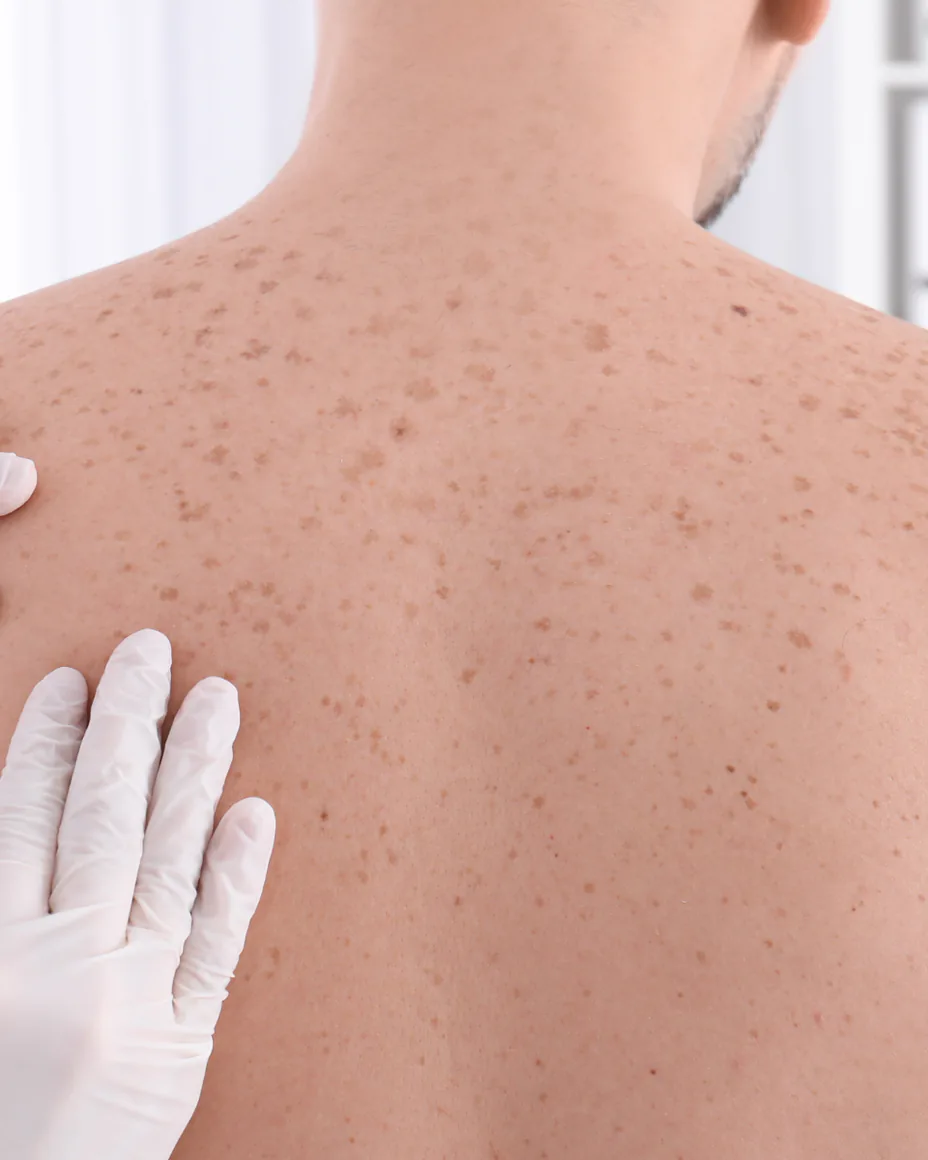
A full skin exam is exactly what it sounds like: a board-certified dermatologist looks over your skin, systematically, including the places you cannot easily see yourself. The scalp, behind the ears, the back, between the toes. It takes about ten minutes, there is nothing to prepare, and there is no downtime because nothing is done to you.
What the dermatologist is looking for is the pattern rather than the spot. Most people have moles, marks and growths, and the overwhelming majority are harmless. What matters is which ones look different from the rest of yours, and that comparison is what training and a dermatoscope are for. Rough, scaly patches get noted at the same time, since those are precancerous and easy to treat early.
If a spot needs a definite answer, the answer comes from a laboratory rather than from an opinion. A small sample is taken under local anesthetic, usually at the same appointment, and sent for examination under a microscope. That is what a biopsy is, and it is a short and ordinary part of the day.
What the appointment covers
- A full skin check, including the areas you cannot see yourself
- A mole that has changed in size, shape or color
- A spot that itches, bleeds, or has not healed
- Precancerous patches, which can be treated before they become anything
- A biopsy at the same visit where one is needed, rather than a second appointment
How long a full skin exam takes. No preparation, no downtime, and nothing done to you unless something needs a closer look. It is the shortest appointment with the most upside in dermatology.
How the appointment works
The examination
You change into a gown and a dermatologist works through your skin methodically, head to toe, using a dermatoscope to look into a spot rather than just at it. You can point out anything you have been watching, and you should.
The decision
Most spots are identified on sight and need nothing. Some are worth photographing and comparing at your next visit. A small number need a definite answer, and you will be told which category each one falls into before you leave.
The biopsy, where one is needed
The area is numbed, a small sample is taken, and it goes to a laboratory for examination under a microscope. It takes a few minutes and usually happens at the same appointment. You get the result either way, and we go through what happens next if there is anything to act on.
What skin cancer is when it is found early and properly treated. Early is the word doing the work in that sentence. [2]
The ABCDEs, and what to do between appointments
You see your own skin every day and a dermatologist sees it twice a year at most, which makes you the most useful person in this process. Five letters describe what is worth a closer look, and they are easy to remember once you have read them once. [1]
| What it means | |
|---|---|
| A for Asymmetry | “One half of the spot is unlike the other half.” |
| B for Border | “The spot has an irregular, scalloped, or poorly defined border.” |
| C for Color | “The spot has varying colors from one area to the next, such as shades of tan, brown or black, or areas of white, red, or blue.” |
| D for Diameter | “While melanomas are usually greater than 6 millimeters, or about the size of a pencil eraser, when diagnosed, they can be smaller.” |
| E for Evolving | “The spot looks different from the rest or is changing in size, shape, or color.” |
Make an appointment if you notice any new spots on your skin, spots that are different from the others, or spots that are changing, itching or bleeding. [1] A good habit is a proper look at your own skin every month or so, in a well-lit room with a hand mirror for your back, and a photograph of anything you want to compare later.
None of this is a substitute for the exam, and it is not a test you can fail. It is simply how the two of you cover more ground together.
Areas we treat
Scalp
Easily missed under hair, and a place people never check themselves.
Face, ears and neck
Where a lifetime of Central Coast sun concentrates.
Chest and back
The back is the single most common site people cannot examine on their own.
Arms and hands
Including the backs of the hands, which take steady sun through a car window.
Legs
The most common site of melanoma in women, and often overlooked.
Feet, toes and nails
Including between the toes and under the nails, which is why we ask about nail polish.
They are so knowledgeable and Tressa is incredible.
The Coastal difference
The comparison is the skill
Anyone can look at a mole. What takes training is knowing how that mole compares to the several dozen others on your body, which ones have changed since last year, and which of the harmless-looking ones is worth a closer look. That judgment is what a board-certified dermatologist brings, and it is the whole value of the appointment.
It also means the answer does not stop at the exam. If something needs a definite answer, the biopsy happens here, usually the same day. If a result comes back needing treatment, what happens next is planned by the same practice, including coordinating a Mohs surgeon where that is the better route. You are not handed a phone number and left to organize it.
When a biopsy is needed, it is usually done at the same appointment under local anesthetic, rather than booked as a second visit weeks later.
When to book a skin check
Worth booking an appointment if:
- You have noticed a new spot, or one that looks different from the rest of yours
- A spot is changing in size, shape or color, or is itching or bleeding [1]
- Something has not healed after a few weeks
- You have never had a full skin exam and have spent years in Central Coast sun
- You have had a skin cancer before, or someone in your family has
Also worth knowing:
- How often you should be checked depends on your own risk, and your dermatologist will tell you what interval suits you [2]
- You can bring a list, or photographs on your phone, of anything you have been watching
- If you can, come without makeup and without nail polish, so your face and nails can be seen properly
If you are not sure whether something is worth an appointment, book it. That is precisely what the ten minutes is for.
After a biopsy
A skin exam on its own needs no aftercare at all, because nothing has been done to your skin. Where a biopsy has been taken, expect a small wound with a dressing over it, a little tenderness for a day or two, and healing over one to two weeks depending on the size and site.
In the first week, do
- Keep the site clean and covered, following the instructions you are given
- Use the ointment we send you home with
- Let any scab come away on its own
- Wear broad-spectrum sunscreen, SPF 30 or higher, over the healed area [3]
In the first week, don’t
- Soak the site in a bath, pool or hot tub until it has healed
- Pick at the dressing or the scab
- Skip your result call, or assume that no news is good news
Call us about anything that does not match what we described: spreading redness, increasing pain, bleeding that does not settle, or any sign of infection. We would far rather hear from you early.
Concerns treated
Moles, growths and sun-damaged skin, examined properly. Pick a concern to see how we approach it.
What the appointment costs
A skin examination and any biopsy taken from it are medical care rather than a cosmetic service, and they are handled differently from the aesthetic treatments on this site. Our office will go through what applies to you when you book.
Laboratory fees for a biopsy are billed separately by the laboratory that examines the sample, and we will tell you when a sample is being sent.
Exam length
About 10 minutes for a full skin check
Preparation
None. Come as you are, without makeup or nail polish if you can
Biopsy, if needed
A few minutes, under local anesthetic, at the same visit
Results
Pathology timing varies by laboratory, and we call you either way
Skin cancer diagnosis frequently asked questions
Asymmetry, Border, Color, Diameter, Evolving. Five letters for what is worth a closer look, set out in full further up this page. [1]
Offered at
Ready to book a skin check? Request an appointment
Fill out the form below, book online in Santa Maria (opens online scheduler), or give us a call. Cosmetic and aesthetic appointments need no referral. For medical dermatology, we are accepting new patients by referral from your primary care physician; send the referral across and then use the same form.
Sources and medical review
1. American Academy of Dermatology Association. “What to look for: ABCDEs of melanoma.” Sets out Asymmetry, Border, Color, Diameter and Evolving as quoted, advises consulting a dermatologist immediately where a mole shows these features, and recommends an appointment for “any new spots on your skin, spots that are different from others, or spots that are changing, itching or bleeding.” https://www.aad.org/public/diseases/skin-cancer/find/at-risk/abcdes · Medical Organization
2. American Academy of Dermatology Association. “How to check your skin for skin cancer.” States that “found early and properly treated, skin cancer is highly treatable,” that performing skin self-exams “can be lifesaving,” that anyone who finds “a spot on your skin that’s growing, bleeding, or changing” should see a board-certified dermatologist, and that the frequency of full-body skin exams by a dermatologist is determined by individual risk factors. https://www.aad.org/public/diseases/skin-cancer/find/know-how · Medical Organization
3. American Academy of Dermatology Association. “How to select a sunscreen.” Broad spectrum, SPF 30 or higher, water resistant. https://www.aad.org/public/everyday-care/sun-protection/shade-clothing-sunscreen/how-to-select-sunscreen · Medical Organization
Content on this page is for educational purposes and is not a substitute for professional medical advice, diagnosis or treatment. A skin examination is not a guarantee that a skin cancer will be found, and any spot that changes between appointments should be reported rather than waited on. Where a biopsy is taken, tenderness, a small wound and a scar at the site are expected. Bleeding, infection and delayed healing are uncommon but possible. Tell us about any bleeding disorder, any blood-thinning medication, and any history of thick or raised scars. Individual results may vary.