

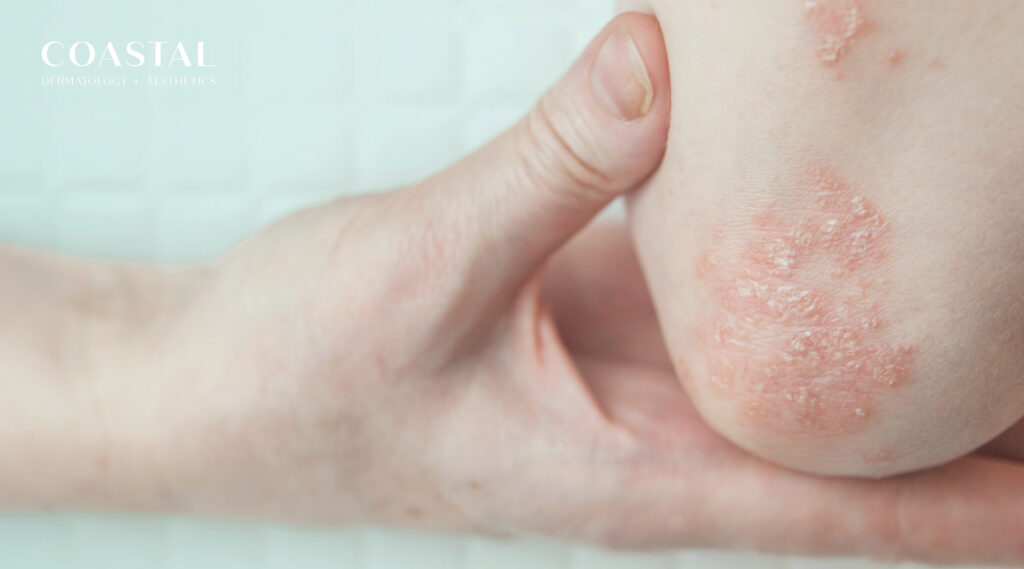
Psoriasis is often mistaken for dry skin or a simple rash, but it’s much more than a surface-only concern. This chronic autoimmune condition causes the immune system to speed up skin cell production, leading to thick, inflamed patches that can be itchy, painful, and persistent. Additionally, chronic inflammation can affect multiple organ systems. While psoriasis can affect people of all ages, the good news is that incredible advances in effective treatments are available to help manage symptoms and improve quality of life.
At Coastal Dermatology + Aesthetics, our board-certified dermatologists provide personalized psoriasis care for patients throughout San Luis Obispo, Santa Maria, and California’s Central Coast. Whether you’ve recently noticed symptoms or have been living with psoriasis for years, understanding the condition is the first step toward finding lasting relief.
What Is Psoriasis?
Psoriasis is a chronic auto-inflammatory disease that causes skin cells to multiply much faster than normal. Healthy skin cells typically take about a month to develop and shed. In individuals with psoriasis, this process may occur in just a few days. As new skin cells build up faster than the body can shed them, thick, raised plaques develop on the skin’s surface.
These plaques are commonly:
- Red or pink
- Covered with silvery-white scales
- Dry or cracked
- Itchy or painful
- Prone to bleeding if scratched
Although psoriasis affects the skin, it begins within the immune system. Overactive immune cells trigger inflammation that accelerates skin cell growth, making psoriasis a lifelong medical condition rather than simply a surface-level skin problem. Additionally, chronic inflammation can affect multiple organ systems, including the joints, cardiovascular system, and metabolic function – leading to joint deformity, higher rates of stroke, high blood pressure, and heart attacks, as well as obesity and links with other autoimmune conditions.
One of the biggest misconceptions about psoriasis is that it is contagious. It is not. You cannot catch psoriasis through physical contact, sharing personal items, or being near someone who has the condition.
Common Symptoms of Psoriasis
Psoriasis can look different from one person to another. Symptoms may appear in small patches or cover larger areas of the body, and flare-ups often come and go over time.
Common symptoms include:
- Thick, raised patches of skin (plaques)
- Silvery scales
- Persistent itching
- Burning or tenderness
- Dry, cracked skin that may bleed
- Flaking on the scalp
- Thickened or pitted fingernails and toenails
- Areas of discoloration after flare-ups improve
While psoriasis most commonly appears on the elbows, knees, scalp, and lower back, it can develop almost anywhere on the body, including the hands, feet, face, and skin folds.
Some individuals also develop psoriatic arthritis, an inflammatory condition that causes joint pain, stiffness, and swelling. Recognizing these symptoms early is important because untreated joint inflammation can lead to permanent damage over time.
What Causes Psoriasis?
There is no single cause of psoriasis. Instead, it develops through a combination of genetic and immune system factors.
Researchers believe that people who develop psoriasis have an inherited tendency that may remain dormant until triggered by environmental factors. When activated, the immune system mistakenly attacks healthy skin cells, creating chronic inflammation. It is important to note that children can also be affected by psoriasis, with at least 10% of cases beginning in childhood.
Several factors contribute to the development of psoriasis, including:
- Family history
- Immune system dysfunction
- Environmental triggers
- Chronic inflammation
Having a family member with psoriasis increases the likelihood of developing the condition, but genetics alone do not guarantee it will occur.
Common Psoriasis Triggers
Although psoriasis cannot always be prevented, understanding personal triggers can help reduce flare-ups.
Some of the most common triggers include:
Stress
Emotional stress is one of the leading triggers for psoriasis flare-ups. Managing stress through exercise, mindfulness, adequate sleep, or counseling may help reduce symptom severity.
Illness or Infection
Colds, strep throat, influenza, and other infections can activate the immune system and trigger new outbreaks.
Skin Injuries
Even minor skin trauma can lead to new psoriasis plaques in affected individuals. This response is known as the Koebner phenomenon and may occur after cuts, burns, insect bites, or excessive scratching.
Cold, Dry Weather
Lower humidity and colder temperatures can dry the skin and worsen existing plaques.
Certain Medications
Some medications may contribute to flare-ups in susceptible individuals. Your dermatologist can help determine whether medications may be playing a role.
Smoking and Alcohol
Smoking and excessive alcohol consumption have both been associated with more severe psoriasis and may reduce treatment effectiveness.
Because triggers vary from person to person, identifying patterns can become an important part of long-term disease management.
How Is Psoriasis Diagnosed?
In most cases, psoriasis can be diagnosed during a comprehensive skin examination performed by a board-certified dermatologist.
Your evaluation may include:
- Review of your medical history
- Discussion of symptoms
- Examination of affected skin
- Evaluation of nail involvement
- Assessment for possible joint symptoms
Occasionally, a small skin biopsy may be recommended if another skin condition needs to be ruled out.
An accurate diagnosis is important because eczema, fungal infections, contact dermatitis, and other skin conditions can sometimes resemble psoriasis but require different treatments.
Treatment Options for Psoriasis
There is currently no cure for psoriasis, but many effective treatments can significantly reduce inflammation, minimize flare-ups, and improve overall skin health. With new medications, the goal has shifted from a reduction of symptoms to putting the disease in a state of complete or near-complete clear skin.
Treatment recommendations depend on several factors, including:
- Severity of symptoms
- Areas of the body involved
- Previous treatments
- Lifestyle and quality of life impact
- Overall health
- Presence of joint disease
Prescription Topical Medications
For mild to moderate psoriasis, prescription creams and ointments are often the first line of treatment.
These may include:
- Corticosteroids
- Vitamin D analogs
- Topical retinoids
- Calcineurin inhibitors for sensitive areas
These medications help reduce inflammation, slow skin cell growth, and relieve itching.
Light Therapy
Controlled ultraviolet light therapy may be recommended for patients with more widespread psoriasis.
When supervised by a dermatologist, phototherapy can reduce inflammation while slowing excessive skin cell production.
Oral Medications
Moderate to severe psoriasis sometimes requires oral medications that help regulate the immune response throughout the body.
These treatments are carefully monitored to maximize benefits while minimizing potential side effects.
Biologic Medications
Biologic therapies have transformed psoriasis treatment for many patients with moderate to severe disease.
These advanced medications target specific parts of the immune system responsible for inflammation and often provide significant improvement for individuals whose psoriasis has not responded to other treatments.
Lifestyle and Skin Care
Medical treatment works best when combined with healthy skin care habits.
Helpful recommendations include:
- Moisturizing daily
- Avoiding harsh soaps
- Managing stress
- Protecting skin from injury
- Maintaining a healthy lifestyle with a focus on nutrition, movement, and overall “gut health”
- Following your treatment plan consistently
Because psoriasis is chronic, ongoing management is often the key to long-term control.
Why Personalized Dermatology Care Matters
No two patients experience psoriasis in exactly the same way.
Some individuals have occasional mild patches, while others experience widespread symptoms that affect their daily lives. The best treatment plan depends on your medical history, lifestyle, symptom severity, treatment goals, and how your skin responds over time.
At Coastal Dermatology & Aesthetics, patients receive individualized care designed around their specific needs rather than a one-size-fits-all approach. As a board-certified dermatologist with expertise in complex medical dermatology, Dr. Christine Kilcline works closely with patients to develop personalized treatment plans that evolve as their condition changes.
By combining medical expertise with ongoing follow-up, many patients are able to achieve better symptom control, reduce flare-ups, and improve their overall quality of life.
When Should You See a Dermatologist?
If you’ve been trying over-the-counter creams without success or your symptoms continue to worsen, it’s time to seek professional evaluation.
Schedule an appointment if you experience:
- Persistent red, scaly patches
- Severe itching or discomfort
- Cracked or bleeding skin
- Symptoms affecting your daily activities
- Joint pain or stiffness
- Frequent flare-ups
- Worsening symptoms despite treatment
Early diagnosis and treatment often help prevent symptoms from becoming more severe and may reduce the risk of long-term complications.
Frequently Asked Questions
Is psoriasis contagious?
No. Psoriasis is an autoimmune disease and cannot be spread through physical contact.
Can psoriasis be cured?
There is currently no cure, but many effective treatments help control symptoms, reduce flare-ups, and improve quality of life.
What causes psoriasis flare-ups?
Common triggers include stress, illness, skin injuries, cold weather, smoking, alcohol, and certain medications.
Can stress make psoriasis worse?
Yes. Stress is just as much a physical response as an emotional response and is one of the most common triggers for psoriasis flare-ups, and may increase inflammation in some individuals.
What treatment works best for psoriasis?
The best treatment depends on the severity of your condition, the areas affected, your medical history, and your overall health. Your dermatologist will recommend a personalized treatment plan.
Is psoriasis related to arthritis?
Yes. Some people develop psoriatic arthritis, which causes joint pain, swelling, and stiffness. Early diagnosis is important to help protect joint health.
It is also important to recognize the impact of chronic inflammation on the cardiovascular system and metabolic function, as stroke, high blood pressure, and obesity are often closely associated with psoriasis. In fact, even a small decrease in weight of 10% has been associated with improved clearance rates. Treatments are also now focusing on improving metabolic health with the use of GLP-1 medications.
Should I moisturize every day?
Yes. Daily moisturizing helps support the skin barrier, reduce dryness, and improve comfort during flare-ups.
When should I see a dermatologist?
If your symptoms are persistent, worsening, painful, or affecting your daily life, a board-certified dermatologist can provide an accurate diagnosis and develop a personalized treatment plan.
Take the Next Step Toward Healthier Skin
Living with psoriasis can be frustrating, but you don’t have to manage it alone. With an accurate diagnosis, personalized treatment plan, and ongoing support, many patients experience significant improvement and regain confidence in their skin.
If you’re experiencing symptoms of psoriasis or struggling with frequent flare-ups, the team at Coastal Dermatology & Aesthetics is here to help. We proudly care for patients throughout San Luis Obispo, Santa Maria, and communities across California’s Central Coast with compassionate, physician-led dermatologic care.
Schedule a consultation today to learn more about your treatment options and take the first step toward healthier, more comfortable skin.