---
title: "Skin Tag Removal"
---
## What skin tag removal does
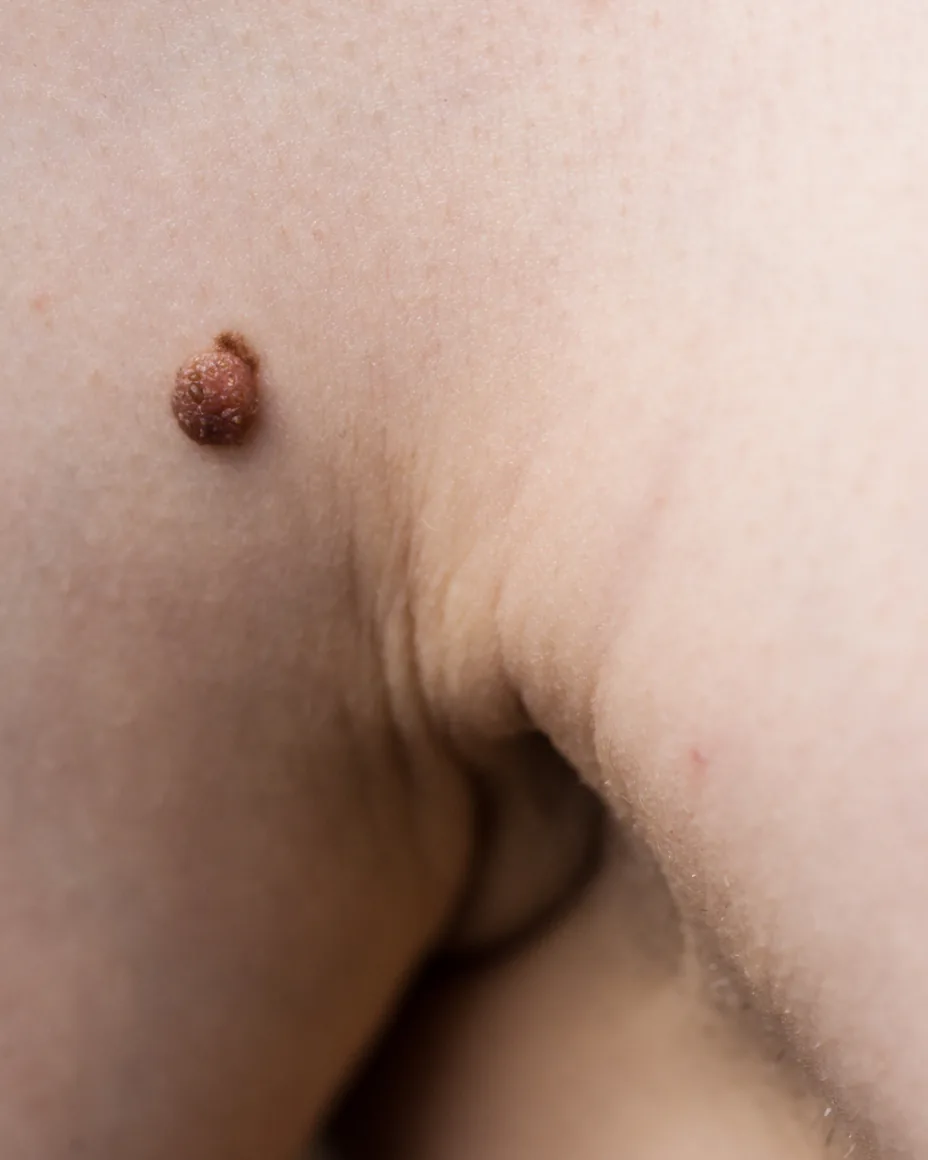
[Skin tags](/conditions/skin-tags/) are soft, harmless growths that form where skin has been rubbing against skin, jewelry or clothing for a while. [1] They turn up under the arms, on the neck, on the eyelids, under the breasts, in the groin, on the sides and the back. They are extremely common, and having them says nothing about your health beyond the fact that something has been rubbing.
Most people have them removed because one keeps catching. On a necklace, a collar, a bra strap, a razor. Sometimes it is an eyelid tag that sits in the way. Sometimes it is simply that you would rather not have it. All of those are good enough reasons, and none of them needs justifying at the appointment.
The removal itself is quick. A dermatologist looks at the growth first to confirm what it is, numbs the area, and takes it off, most often by snipping it, freezing it or treating it with a fine electrical tip. [1] Which method suits depends on the size and where it sits. The growth is gone immediately and the skin closes over the next few days.
**What we treat this way**
- Skin tags on the neck, underarms, eyelids, groin and under the breasts
- Tags that catch on jewelry, collars, straps or a razor
- Growths that have become irritated, sore or have bled
- Several tags in one appointment, rather than one visit each
- A mole or another growth that you want looked at properly while you are here
Same visit
Examined, numbed and removed in one appointment, with the result there when you look in the mirror on the way out. Very little else on this site works that quickly.
## How treatment works
### It gets looked at first
Before anything else, a dermatologist examines the growth to confirm it is what you think it is. This takes moments and it is the part that matters most. If there is any question, the tissue goes to a lab.
### The area is numbed
A small amount of local anesthetic goes in. This is the only part most people feel, and it is brief. After that the area is numb and you will feel pressure rather than anything sharp.
### The growth comes off
Snipped, frozen or treated with a fine electrical tip, depending on size and location. [1] Bleeding is stopped, a dressing goes on where one is needed, and you are done. The whole thing usually takes a few minutes.
3 ways
The methods a dermatologist uses: snipping with sterile scissors, freezing with liquid nitrogen, or a fine electrical tip. [1] Which one suits your tag depends on its size and where it sits, and that is chosen for you.
## What the appointment buys you
Skin tags look like the simplest thing in the world to deal with yourself, and there is a whole shelf of products sold on that idea. Here is what the short visit gives you that the shelf does not.
| | An in-office removal | A kit bought online |
| --- | --- | --- |
| Confirming what it is | A dermatologist examines the growth first, and sends tissue to a lab if there is any question [2] | Nothing is examined |
| Numbing | Local anesthetic. You feel pressure, not the removal | None |
| Scarring | Technique chosen to keep the mark to a minimum, which is a large part of the training [2] | The FDA notes skin injuries and scarring among the risks [2] |
| Bleeding | Handled in the room, in seconds [2] | Yours to manage |
| Regulatory standing | A procedure performed by a board-certified dermatologist | The FDA states that none of these products has been approved for this use [2] |
Products sold for removing skin tags at home are not recommended. [1] The appointment is short, the growth is gone the same day, and somebody qualified has confirmed what it was. That is the whole difference, and it is why this is one of the most satisfying small visits we do.
## Areas we treat
### Neck
The most common place people ask about, and where necklaces and collars catch.
### Underarms
Where friction produces them steadily, often several at once.
### Eyelids
Handled carefully and gently, and worth having done properly given where it is.
### Under the breasts
Where a bra strap or band rubs, and where tags often become sore.
### Groin and inner thighs
Friction areas that people are relieved to have dealt with.
### Trunk and back
Sides, abdomen and back, easily treated in the same visit.
> The staff is terrific, front to back. Thank you, Dr. Kilcline, for the great work today.
— **Steve P.**, San Luis Obispo (5 out of 5 stars)
The Coastal difference
## The part that takes a dermatologist is the first ten seconds
Removing a skin tag is quick. Knowing it is a skin tag is the part that takes training. Most soft growths in a friction area are exactly what they appear to be, and every so often something that looks ordinary is worth a closer look or a trip to the lab. In a dermatology practice that check happens automatically, before anything is removed, and it costs you nothing but a moment.
It also means anything else you have noticed can be dealt with in the same visit. People routinely come in for one tag and mention a mole they have been half-watching for a year. That is a good use of the appointment, and it is usually the more important conversation of the two.
Harmless
What skin tags are. [1] Removal is a matter of comfort and preference rather than necessity, which means the decision is entirely yours.
## Is it right for you?
**This is usually straightforward if:**
- You have one or more skin tags that catch, rub, or you would simply rather be without
- A tag has become irritated, sore or has bled
- One sits somewhere awkward, like an eyelid
- You have several and would rather deal with them in one appointment
**Worth mentioning at your appointment:**
- Any growth that has changed in size, color or shape, which we will want to look at properly
- Any bleeding disorder or blood-thinning medication you take
- A history of thick or raised scars
- Whether you are pregnant, since skin tags are common in pregnancy and often settle afterward
None of this needs sorting out in advance. Bring it up when you come in and it will be handled.
## What to expect afterward
Very little. A small dressing goes on where one is needed, and the area is a little tender for a day or so. Small tags heal in a few days; larger ones can take a couple of weeks. Frozen tags usually darken and fall away on their own over a week or two, which is exactly what should happen.
**Afterward, do**
- Keep the area clean and covered until it has closed over
- Use whatever ointment we send you home with
- Let anything that scabs or darkens come away on its own
- Wear sunscreen over a healing area, since new skin marks easily [3]
**Afterward, don't**
- Pick at a scab or pull at a tag that is separating
- Soak the area in a bath, pool or hot tub until it has healed
- Worry if a frozen tag takes a week or two to drop off
Call us about anything that does not match what we described: spreading redness, increasing pain, or any sign of infection. We would far rather hear from you early.
## Concerns treated
Small benign growths, checked and removed. Pick a concern to see how we approach it.
- [Skin Tags](https://coastaldermaesthetics.com/conditions/skin-tags/)
- [Moles](https://coastaldermaesthetics.com/conditions/moles/)
## What treatment costs
The cost depends on how many growths are being removed and the method used, and it is quoted before anything is done. Removing several in one appointment is more economical than returning for each one, which is why we would rather see all of them at once.
Because a skin tag can be removed for comfort or for appearance, how the visit is handled varies. Our office will go through what applies to you when you book.
Appointment length
15 to 30 minutes, often less for a single tag
Discomfort
The area is numbed first. Most people feel pressure and nothing more
Results appear
Immediately. The growth is gone when you leave
Healing
A few days for a small one, up to a couple of weeks for a larger one
## Skin tag removal frequently asked questions
**Q: Does it hurt?**
The area is numbed first, so the removal itself is pressure rather than pain. The anesthetic going in is the only part most people notice, and it is over in a second or two.
**Q: Can I just remove it myself?**
The products sold for this are not recommended, and the FDA has not approved any of them for removing growths at home. [1][2] The visit is short, it is numbed, and somebody confirms what the growth is first. The section above on what the appointment buys you lays out the difference.
**Q: Will removing one make more grow?**
No. Removing a skin tag does not cause new ones to form. Some people are simply prone to them and will develop more over time in the same friction areas, which is unrelated to having had one taken off.
**Q: Can you take off several in one visit?**
Yes, and it is usually the sensible way to do it. Tell us where they all are when you book so enough time is set aside.
**Q: Will it leave a mark?**
Usually very little, and minimizing that is a large part of what the training is for. [2] Larger growths and certain locations leave more than a small tag on the neck, and you will get a realistic picture before anything is done.
**Q: What if it turns out not to be a skin tag?**
Then it goes to a lab and you get a proper answer, which is the single best reason to have a growth removed in a dermatology practice rather than anywhere else. [2] It is a straightforward next step, not a cause for alarm.
A few minutes
How long the removal itself takes once the area is numb. It is one of the shortest, most immediately satisfying appointments in dermatology.
## Offered at
- [San Luis Obispo](https://coastaldermaesthetics.com/locations/coastal-dermatology-aesthetics/)
- [Santa Maria](https://coastaldermaesthetics.com/locations/santa-maria/)
## Ready to have it looked at? Request an appointment
## Sources and medical review
1. American Academy of Dermatology Association. "Skin tags: Why they develop, and how to remove them." States that skin tags are "harmless growths that can appear anywhere on your skin," that they develop "where skin has been rubbing against skin, jewelry, or clothing for some time," lists cryosurgery, electrodesiccation and snipping as the removal methods a dermatologist uses, and states that "products that you can use at home to remove skin tags are not recommended." [https://www.aad.org/public/diseases/a-z/skin-tags](https://www.aad.org/public/diseases/a-z/skin-tags) · Medical Organization
2. American Academy of Dermatology Association. "5 reasons to see a dermatologist for mole, skin tag removal." Covers confirming what a growth is and sending tissue to a lab, infection control, minimizing scarring, and managing bleeding, and states that the FDA warns at-home removal products carry risks including skin injuries, infection and scarring, and that "none of the products sold for removing moles, skin tags, and other growths at home has received FDA approval." [https://www.aad.org/public/diseases/a-z/mole-skin-tag-removal](https://www.aad.org/public/diseases/a-z/mole-skin-tag-removal) · Medical Organization
3. American Academy of Dermatology Association. "How to select a sunscreen." Broad spectrum, SPF 30 or higher, water resistant. [https://www.aad.org/public/everyday-care/sun-protection/shade-clothing-sunscreen/how-to-select-sunscreen](https://www.aad.org/public/everyday-care/sun-protection/shade-clothing-sunscreen/how-to-select-sunscreen) · Medical Organization
Content on this page is for educational purposes and is not a substitute for professional medical advice. Skin tags are benign growths and removal is generally elective. Tenderness for a day or two, and a small scab or a treated growth that darkens and separates over one to two weeks, are expected. Bleeding, infection and scarring are uncommon but possible. Tell us about any bleeding disorder, any blood-thinning medication, and any history of thick or raised scars. Any growth that has changed in size, color or shape should be examined rather than simply removed. Individual results may vary.
```ld+json
{
"@context": "https://schema.org",
"@graph": [
{
"@context": "https://schema.org",
"@type": "Service",
"@id": "https://coastaldermaesthetics.com/treatments/skin-tag-removal/#service",
"name": "Skin Tag Removal",
"url": "https://coastaldermaesthetics.com/treatments/skin-tag-removal/",
"description": "The one that catches on your necklace, or your collar, or your razor. Skin tag removal is one of the quickest things we do: the growth is examined to confirm what it is, the area is numbed, and it comes off in a few minutes. You leave without it.",
"provider": {
"@type": "Organization",
"name": "Coastal Dermatology + Aesthetics"
},
"image": {
"@type": "ImageObject",
"contentUrl": "https://coastaldermaesthetics.com/wp-content/uploads/2026/07/skin-tag-removal-2x-1-1024x512.jpg",
"width": 1024,
"height": 512,
"caption": "Happy woman after skin tag removal"
}
},
{
"@context": "https://schema.org",
"@type": "MedicalWebPage",
"@id": "https://coastaldermaesthetics.com/treatments/skin-tag-removal/#webpage",
"name": "Skin Tag Removal",
"url": "https://coastaldermaesthetics.com/treatments/skin-tag-removal/",
"mainEntity": {
"@id": "https://coastaldermaesthetics.com/treatments/skin-tag-removal/#service"
},
"lastReviewed": "2026-08-01",
"reviewedBy": {
"@type": "Person",
"@id": "https://coastaldermaesthetics.com/providers/dr-christine-kilcline/#provider",
"name": "Dr. Christine Kilcline",
"url": "https://coastaldermaesthetics.com/providers/dr-christine-kilcline/"
},
"mentions": [
{
"@type": "MedicalCondition",
"name": "Skin tag",
"sameAs": "https://www.wikidata.org/wiki/Q3179593"
},
{
"@type": "MedicalProcedure",
"name": "Cryosurgery",
"sameAs": "https://www.wikidata.org/wiki/Q2705075"
}
],
"about": [
{
"@type": "MedicalSpecialty",
"name": "Dermatology",
"sameAs": "https://www.wikidata.org/wiki/Q171171"
}
],
"speakable": {
"@type": "SpeakableSpecification",
"cssSelector": [
".geo-summary"
]
}
},
{
"@context": "https://schema.org",
"@type": "BreadcrumbList",
"itemListElement": [
{
"@type": "ListItem",
"position": 1,
"name": "Home",
"item": {
"@id": "https://coastaldermaesthetics.com/",
"@type": "WebSite",
"name": "Home"
}
},
{
"@type": "ListItem",
"position": 2,
"name": "Treatments",
"item": {
"@id": "https://coastaldermaesthetics.com/treatments/",
"@type": "CollectionPage",
"name": "Treatments"
}
},
{
"@type": "ListItem",
"position": 3,
"name": "Skin Tag Removal",
"item": "https://coastaldermaesthetics.com/treatments/skin-tag-removal/"
}
]
},
{
"@context": "https://schema.org",
"@type": "Question",
"name": "Skin Tag Removal",
"acceptedAnswer": {
"@type": "Answer",
"text": "Skin tag removal is a short in-office procedure for the small, soft, harmless growths that form where skin rubs against skin, clothing or jewelry. A dermatologist confirms what the growth is, numbs the area, and removes it. Coastal Dermatology + Aesthetics performs it at its San Luis Obispo office."
},
"isPartOf": {
"@id": "https://coastaldermaesthetics.com/treatments/skin-tag-removal/#webpage"
},
"url": "https://coastaldermaesthetics.com/treatments/skin-tag-removal/"
},
{
"@context": "https://schema.org",
"@type": "Review",
"reviewBody": "The staff is terrific, front to back. Thank you, Dr. Kilcline, for the great work today.",
"itemReviewed": {
"@type": "Organization",
"@id": "https://coastaldermaesthetics.com/#organization",
"name": "Coastal Dermatology + Aesthetics"
},
"author": {
"@type": "Person",
"name": "Steve P."
},
"reviewRating": {
"@type": "Rating",
"ratingValue": 5,
"bestRating": 5
}
},
{
"@context": "https://schema.org",
"@type": "FAQPage",
"mainEntity": [
{
"@type": "Question",
"name": "Does it hurt?",
"acceptedAnswer": {
"@type": "Answer",
"text": "The area is numbed first, so the removal itself is pressure rather than pain. The anesthetic going in is the only part most people notice, and it is over in a second or two.
"
}
},
{
"@type": "Question",
"name": "Can I just remove it myself?",
"acceptedAnswer": {
"@type": "Answer",
"text": "The products sold for this are not recommended, and the FDA has not approved any of them for removing growths at home. [1][2] The visit is short, it is numbed, and somebody confirms what the growth is first. The section above on what the appointment buys you lays out the difference.
"
}
},
{
"@type": "Question",
"name": "Will removing one make more grow?",
"acceptedAnswer": {
"@type": "Answer",
"text": "No. Removing a skin tag does not cause new ones to form. Some people are simply prone to them and will develop more over time in the same friction areas, which is unrelated to having had one taken off.
"
}
},
{
"@type": "Question",
"name": "Can you take off several in one visit?",
"acceptedAnswer": {
"@type": "Answer",
"text": "Yes, and it is usually the sensible way to do it. Tell us where they all are when you book so enough time is set aside.
"
}
},
{
"@type": "Question",
"name": "Will it leave a mark?",
"acceptedAnswer": {
"@type": "Answer",
"text": "Usually very little, and minimizing that is a large part of what the training is for. [2] Larger growths and certain locations leave more than a small tag on the neck, and you will get a realistic picture before anything is done.
"
}
},
{
"@type": "Question",
"name": "What if it turns out not to be a skin tag?",
"acceptedAnswer": {
"@type": "Answer",
"text": "Then it goes to a lab and you get a proper answer, which is the single best reason to have a growth removed in a dermatology practice rather than anywhere else. [2] It is a straightforward next step, not a cause for alarm.
"
}
}
]
}
]
}
```