---
title: "Spider Veins"
---
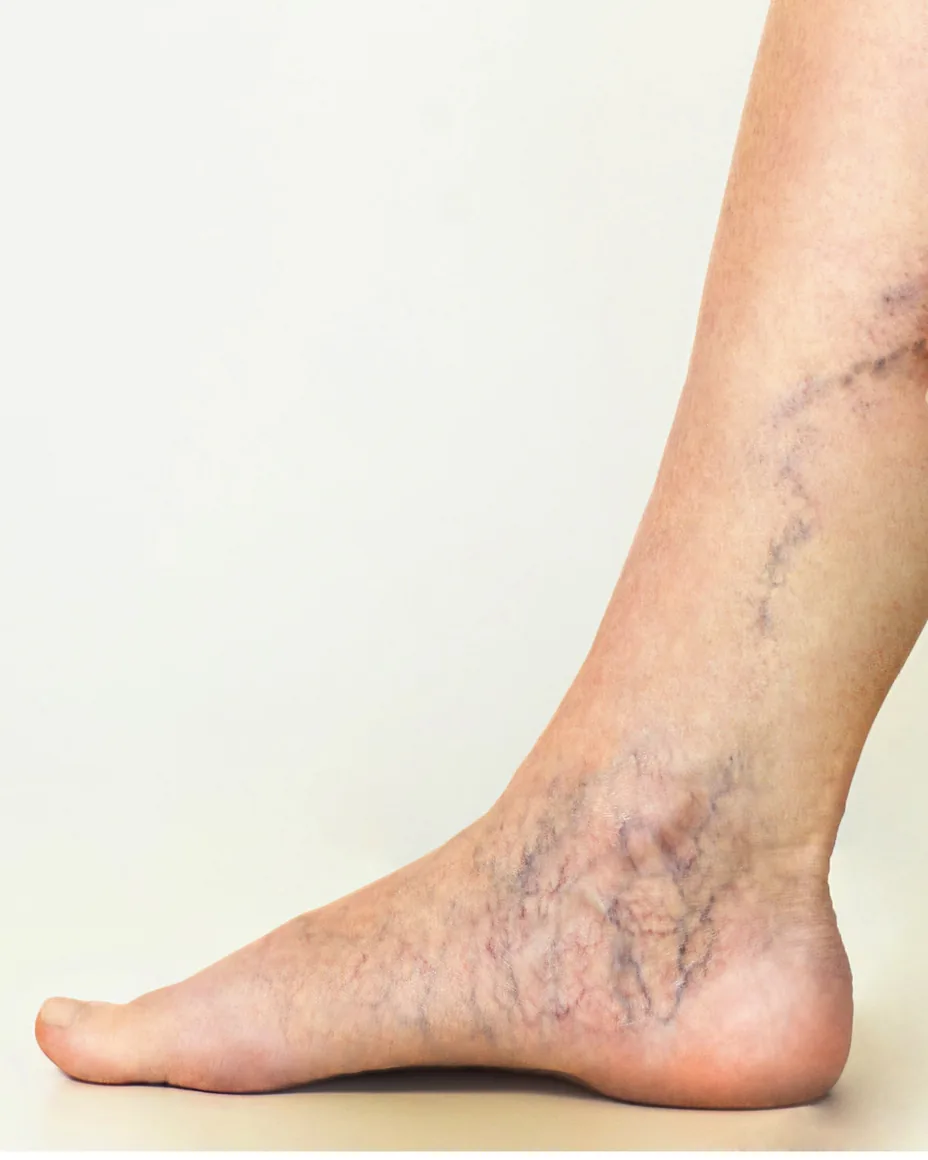
A spider vein is a small blood vessel that has widened and settled close enough to the surface to show through. The branching pattern is where the name comes from. On a face they usually appear beside the nose, across the cheeks and on the chin. On legs they tend to arrive in clusters on the thigh, behind the knee or around the ankle.
**They lie flat.** Run a finger over one and you feel nothing. That single fact is the most useful thing on this page, because it separates a cosmetic concern that a laser clears from a circulation problem that needs a different specialist entirely.
Spider veins carry no health risk of their own. Nothing happens if you leave them alone for the rest of your life, and people have them treated because of how they look. That is a perfectly good reason and it does not need dressing up as anything else.
**Worth having looked at rather than assumed**
- A vein that bulges above the skin, or that you can feel with a fingertip
- Leg veins that ache, throb or feel heavy by the end of the day
- Swelling in the ankle on the same leg
- Skin changes around the ankle, or a sore that will not heal
- A cluster that appeared suddenly rather than gradually
These three get grouped together constantly and they go to three different places. Three questions sort out which one you are looking at, and you can answer all of them yourself.
Ask yourselfIf yesWhat that meansCan I feel it? Run a fingertip lightly over it with your eyes closedYou can feel a cord or a bulgeNot a spider vein. Raised, ropey veins are the varicose kind, and they belong with a vein specialist rather than hereDoes the leg ache, throb, swell or feel heavy by evening?YesSymptoms point at circulation rather than appearance, and that is a medical assessment first, whatever the veins look likeOn my face, is there a general flush as well as the lines?YesLikely flushing and background redness alongside the vessels, and the plan should treat both rather than only the lines
**If the answer to all three is no, what you have is a cosmetic concern with a straightforward answer.** Flat facial veins and flat leg spider veins clear well with light-based treatment, and most people see a substantial reduction after one to three sessions. [1]
Two things this cannot sort out on its own: leg veins can be flat at the surface and still sit downstream of a circulation problem, which is why symptoms matter more than appearance on legs; and [birthmarks and other vessel problems](/conditions/vascular-anomalies/) are their own category and are assessed rather than assumed.
Individual vessels and general redness are different targets and they respond to different tools. A pulsed dye laser tuned to the color of blood is what clears a distinct line beside the nose. Pulses of light across a whole area are what lift a background flush. **Both are here, which means the choice follows your skin rather than what happens to be in the room.** Most faces need some of each, and having both available is what lets a plan say so.
The other half is what gets ruled out first. A vein you can feel is a different condition. Symptomatic legs are a circulation question before they are a cosmetic one. And a face full of fine vessels frequently has [a flush that comes and goes](/conditions/rosacea/) underneath it, which is treatable and which most people have never had named. A board-certified dermatologist sorting that out before anything is aimed at your skin is the actual service.
**This is a good conversation to have if:**
- You have fine flat red or purple lines on your nose, cheeks or chin
- You have flat clusters of leg veins with no aching, swelling or heaviness
- You have both visible lines and a general flush, which is common and treatable together
- Makeup covers it and you would rather it did not have to
**Start somewhere else if:**
- A vein bulges above the skin or you can feel it. That belongs with a vein specialist
- Your legs ache, throb, swell or feel heavy, which is a circulation assessment first
- There are skin changes around the ankle, or a sore that will not heal
We would rather tell you at the first appointment that a vein specialist is the right call than treat the surface of something that needs looking at properly. That is a short conversation and it is worth having early.
**Worth doing**
- Broad spectrum sunscreen, SPF 30 or higher, water resistant, every day, since sun weakens the support around the vessels [2]
- Note what makes your face flush and how often, because the same triggers drive new facial vessels
- Move rather than stand still where you can, and elevate legs at the end of a long day
- Come back for a top-up when new vessels appear rather than waiting for a full return
**Worth knowing**
- Treated vessels do not come back, and new ones can form over time [1]
- Results tend to last three to five years, and occasional maintenance is normal rather than a sign anything failed [1]
- Facial vessels and facial flushing often travel together, and treating only one leaves the other doing its work
- Legs and faces behave differently, and a plan for one does not transfer to the other
A laser tuned to the color of blood for individual vessels, and pulses of light for a general flush. Pick a treatment to see how it works.
What a plan costs depends on the area, on how many vessels there are and on whether a general flush is being treated alongside them, which is worked out at the consultation. You get the plan and its cost before anything is booked.
**Q: Are spider veins dangerous?**
No. They carry no health risk of their own and nothing happens if you leave them alone. People have them treated because of how they look, which is reason enough. What is worth checking is whether what you have is actually a spider vein, which the three questions above cover.
**Q: What is the difference between spider veins and varicose veins?**
Feel for it. Spider veins are flat and you feel nothing when you run a finger over them. Varicose veins are raised, ropey and often uncomfortable, and they belong with a vein specialist rather than with a dermatologist. Aching, throbbing, swelling or heaviness in the leg point the same way, whatever the veins look like.
**Q: Does treatment work, and how many sessions?**
Most patients see a 50 to 75 percent reduction in visible blood vessels after one to three treatments, usually spaced three to four weeks apart. [1] Your own number depends on how many vessels there are and where they sit, and you will have it after the area has been looked at rather than from a website.
**Q: Will they come back?**
The vessels that are treated do not reappear. New ones can form over time, and results tend to last three to five years. [1] That is why occasional maintenance is normal here rather than a sign that something went wrong.
**Q: I have veins on my nose and my face also goes red. Are those connected?**
Very likely. The same widened surface vessels that show as lines also produce background flushing, and flushing and background redness is one of the most common companions to facial spider veins. Treating only the visible lines leaves the flush behind, so the plan usually addresses both.
**Q: Can leg veins be treated the same way as facial ones?**
Sometimes, and legs need more care than faces do. Flat leg spider veins with no symptoms respond to light-based treatment. Legs that ache, swell or feel heavy get assessed for circulation first, because treating the surface of a vein that sits downstream of a larger problem does not hold.
1. American Academy of Dermatology Association. "Lasers and lights: How well do they treat rosacea?" Reports that most patients see a 50% to 75% reduction in visible blood vessels after 1 to 3 treatments, that treatments are usually spaced 3 to 4 weeks apart, and that results tend to last 3 to 5 years, with treated vessels not reappearing but new ones able to form. [https://www.aad.org/public/diseases/rosacea/treatment/lasers-lights](https://www.aad.org/public/diseases/rosacea/treatment/lasers-lights) · Medical Organization
2. American Academy of Dermatology Association. "How to select a sunscreen." Broad spectrum, SPF 30 or higher, water resistant, reapplied every two hours outdoors and after swimming or sweating. [https://www.aad.org/public/everyday-care/sun-protection/shade-clothing-sunscreen/how-to-select-sunscreen](https://www.aad.org/public/everyday-care/sun-protection/shade-clothing-sunscreen/how-to-select-sunscreen) · Medical Organization
Content on this page is for educational purposes and is not a substitute for professional medical advice, diagnosis or treatment. The self-assessment described on this page narrows the possibilities and does not replace an examination. Not every visible vein is a spider vein, and leg veins in particular can sit downstream of a circulation problem that requires a different specialist. Laser and light treatment carries risks including temporary bruising, swelling and changes in skin color, and the risk is higher on tanned skin and on deeper skin tones. Results and the number of treatments needed vary from person to person. Individual results may vary. Cosmetic consultations are $125, paid at booking and credited toward the cost of treatment.
```ld+json
{
"@context": "https://schema.org",
"@graph": [
{
"@context": "https://schema.org",
"@type": "MedicalCondition",
"@id": "https://coastaldermaesthetics.com/conditions/spider-veins/#concern",
"name": "Spider Veins",
"url": "https://coastaldermaesthetics.com/conditions/spider-veins/",
"description": "Spider veins are the fine red or purple lines that surface on the nose, cheeks and legs. They are flat, they are harmless, and a laser tuned to the color of blood clears them. The important distinction is what they are not, because a vein that bulges…",
"image": {
"@type": "ImageObject",
"contentUrl": "https://coastaldermaesthetics.com/wp-content/uploads/2026/07/spider-veins-2x-4-1024x512.jpg",
"width": 1024,
"height": 512,
"caption": "woman checking her legs for spider veins"
},
"possibleTreatment": [
{
"@type": "MedicalTherapy",
"name": "IPL Photofacial",
"url": "https://coastaldermaesthetics.com/treatments/ipl-photofacial/"
},
{
"@type": "MedicalTherapy",
"name": "Skin Care Consultations",
"url": "https://coastaldermaesthetics.com/treatments/skin-care-consultations/"
},
{
"@type": "MedicalTherapy",
"name": "ThreeForMe™ Photorejuvenation",
"url": "https://coastaldermaesthetics.com/treatments/threeforme-photorejuvenation/"
},
{
"@type": "MedicalTherapy",
"name": "VBeam Photorejuvenation",
"url": "https://coastaldermaesthetics.com/treatments/vbeam-photorejuvenation/"
}
]
},
{
"@context": "https://schema.org",
"@type": "MedicalWebPage",
"@id": "https://coastaldermaesthetics.com/conditions/spider-veins/#webpage",
"name": "Spider Veins",
"url": "https://coastaldermaesthetics.com/conditions/spider-veins/",
"mainEntity": {
"@id": "https://coastaldermaesthetics.com/conditions/spider-veins/#concern"
},
"lastReviewed": "2026-08-01",
"reviewedBy": {
"@type": "Person",
"@id": "https://coastaldermaesthetics.com/providers/dr-christine-kilcline/#provider",
"name": "Dr. Christine Kilcline",
"url": "https://coastaldermaesthetics.com/providers/dr-christine-kilcline/"
},
"mentions": [
{
"@type": "MedicalCondition",
"name": "Varicose veins",
"sameAs": "https://www.wikidata.org/wiki/Q201180"
}
],
"about": [
{
"@type": "MedicalSpecialty",
"name": "Dermatology",
"sameAs": "https://www.wikidata.org/wiki/Q171171"
},
{
"@type": "MedicalCondition",
"name": "Telangiectasia",
"sameAs": "https://www.wikidata.org/wiki/Q1634800"
}
],
"speakable": {
"@type": "SpeakableSpecification",
"cssSelector": [
".geo-summary"
]
}
},
{
"@context": "https://schema.org",
"@type": "BreadcrumbList",
"itemListElement": [
{
"@type": "ListItem",
"position": 1,
"name": "Home",
"item": {
"@id": "https://coastaldermaesthetics.com/",
"@type": "WebSite",
"name": "Home"
}
},
{
"@type": "ListItem",
"position": 2,
"name": "Concerns",
"item": {
"@id": "https://coastaldermaesthetics.com/conditions/",
"@type": "CollectionPage",
"name": "Concerns"
}
},
{
"@type": "ListItem",
"position": 3,
"name": "Spider Veins",
"item": "https://coastaldermaesthetics.com/conditions/spider-veins/"
}
]
},
{
"@context": "https://schema.org",
"@type": "Question",
"name": "Spider Veins",
"acceptedAnswer": {
"@type": "Answer",
"text": "Spider veins are small blood vessels that have widened close to the surface of the skin, appearing as fine flat red, blue or purple lines. They are harmless and most commonly appear on the face and legs. They are treated with laser and light at Coastal Dermatology + Aesthetics in San Luis Obispo."
},
"isPartOf": {
"@id": "https://coastaldermaesthetics.com/conditions/spider-veins/#webpage"
},
"url": "https://coastaldermaesthetics.com/conditions/spider-veins/"
},
{
"@context": "https://schema.org",
"@type": "Review",
"reviewBody": "The staff is terrific, front to back. Thank you, Dr. Kilcline, for the great work today.",
"itemReviewed": {
"@type": "Organization",
"@id": "https://coastaldermaesthetics.com/#organization",
"name": "Coastal Dermatology + Aesthetics"
},
"author": {
"@type": "Person",
"name": "Steve P."
},
"reviewRating": {
"@type": "Rating",
"ratingValue": 5,
"bestRating": 5
}
},
{
"@context": "https://schema.org",
"@type": "FAQPage",
"mainEntity": [
{
"@type": "Question",
"name": "Are spider veins dangerous?",
"acceptedAnswer": {
"@type": "Answer",
"text": "No. They carry no health risk of their own and nothing happens if you leave them alone. People have them treated because of how they look, which is reason enough. What is worth checking is whether what you have is actually a spider vein, which the three questions above cover.
"
}
},
{
"@type": "Question",
"name": "What is the difference between spider veins and varicose veins?",
"acceptedAnswer": {
"@type": "Answer",
"text": "Feel for it. Spider veins are flat and you feel nothing when you run a finger over them. Varicose veins are raised, ropey and often uncomfortable, and they belong with a vein specialist rather than with a dermatologist. Aching, throbbing, swelling or heaviness in the leg point the same way, whatever the veins look like.
"
}
},
{
"@type": "Question",
"name": "Does treatment work, and how many sessions?",
"acceptedAnswer": {
"@type": "Answer",
"text": "Most patients see a 50 to 75 percent reduction in visible blood vessels after one to three treatments, usually spaced three to four weeks apart. [1] Your own number depends on how many vessels there are and where they sit, and you will have it after the area has been looked at rather than from a website.
"
}
},
{
"@type": "Question",
"name": "Will they come back?",
"acceptedAnswer": {
"@type": "Answer",
"text": "The vessels that are treated do not reappear. New ones can form over time, and results tend to last three to five years. [1] That is why occasional maintenance is normal here rather than a sign that something went wrong.
"
}
},
{
"@type": "Question",
"name": "I have veins on my nose and my face also goes red. Are those connected?",
"acceptedAnswer": {
"@type": "Answer",
"text": "Very likely. The same widened surface vessels that show as lines also produce background flushing, and flushing and background redness is one of the most common companions to facial spider veins. Treating only the visible lines leaves the flush behind, so the plan usually addresses both.
"
}
},
{
"@type": "Question",
"name": "Can leg veins be treated the same way as facial ones?",
"acceptedAnswer": {
"@type": "Answer",
"text": "Sometimes, and legs need more care than faces do. Flat leg spider veins with no symptoms respond to light-based treatment. Legs that ache, swell or feel heavy get assessed for circulation first, because treating the surface of a vein that sits downstream of a larger problem does not hold.
"
}
}
]
}
]
}
```