---
title: "Skin Tags"
---
A skin tag is a little tag of ordinary skin with a core of loose tissue and small blood vessels inside it, attached by a narrow stalk. That is the whole of it. The short version is worth taking at face value: skin tags are harmless growths. [1] They are not contagious, they are not made of anything foreign, and nothing happens if you leave one alone for the rest of your life.
**What they look like.** Soft, usually the same color as your skin or slightly darker, sometimes pink, and sometimes red when something has been rubbing on them. [1] Most run from about a pinhead to a grain of rice. The giveaway is the stalk: a skin tag hangs off the skin and moves when you touch it rather than sitting flat in it.
**Not everything small and soft is a skin tag.** [Moles](/conditions/moles/) sit in the skin rather than hanging off it and are usually more pigmented. [Warts](/conditions/warts/) are rough and firm. A few other growths look similar enough to need [a laboratory answer](/treatments/skin-cancer-diagnosis/). That is the one genuinely useful reason to have a small growth looked at, and it takes a few minutes.
**Worth having looked at if a growth:**
- Changes color, or has more than one color in it
- Bleeds without having been caught on anything
- Grows steadily, rather than staying the size it arrived at
- Hurts, or stays sore
- Simply looks unlike the others you have
Start with the part that does not change: a skin tag is harmless, it does not turn into anything, and having several does not make them less harmless. [1]
What is true alongside that is that skin tags are more common in people with diabetes or metabolic syndrome, meaning high blood pressure, unhealthy blood sugar, excess abdominal fat or unhealthy cholesterol. [1] Multiple skin tags are also associated with insulin resistance, and in younger women a crop of them is sometimes associated with polycystic ovary syndrome, a common hormone condition. [2]
**None of that is a diagnosis and none of it is a reason to worry.** Plenty of people with a lot of skin tags have nothing else going on at all. The association runs the other way round from how it usually gets described: it is not that skin tags cause anything, it is that the same conditions that make skin fold and rub also happen to be worth knowing about.
**So the useful thing is small:**
What to doMention it in one sentence at your next visit with your regular doctorWhat to sayThat you have picked up a number of skin tags over the last year or twoWhyBecause it costs nothing, and because routine blood work is the thing that answers itWhat not to doAnything urgent, anything dramatic, or any searching that ends in a self-diagnosisWhat we will doTell you the same thing, plainly, and look at the growths themselves
That is the whole recommendation. We would rather say it here, once, than have you find a worse version of it somewhere else.
AreaWhy it happens hereNeck and neck creasesCollars, necklaces and skin folding on itself, all day, for years. [1]UnderarmsWarm, damp and in constant motion, which is the exact combination. [1]EyelidsThin, mobile skin that rubs with every blink. [1]Under the bustA bra line is a friction line, and this is one of the most common sites. [1]GroinSkin folding against skin, warm and covered. [1]Upper chest and shouldersStraps, collars and seams, on skin that already folds.
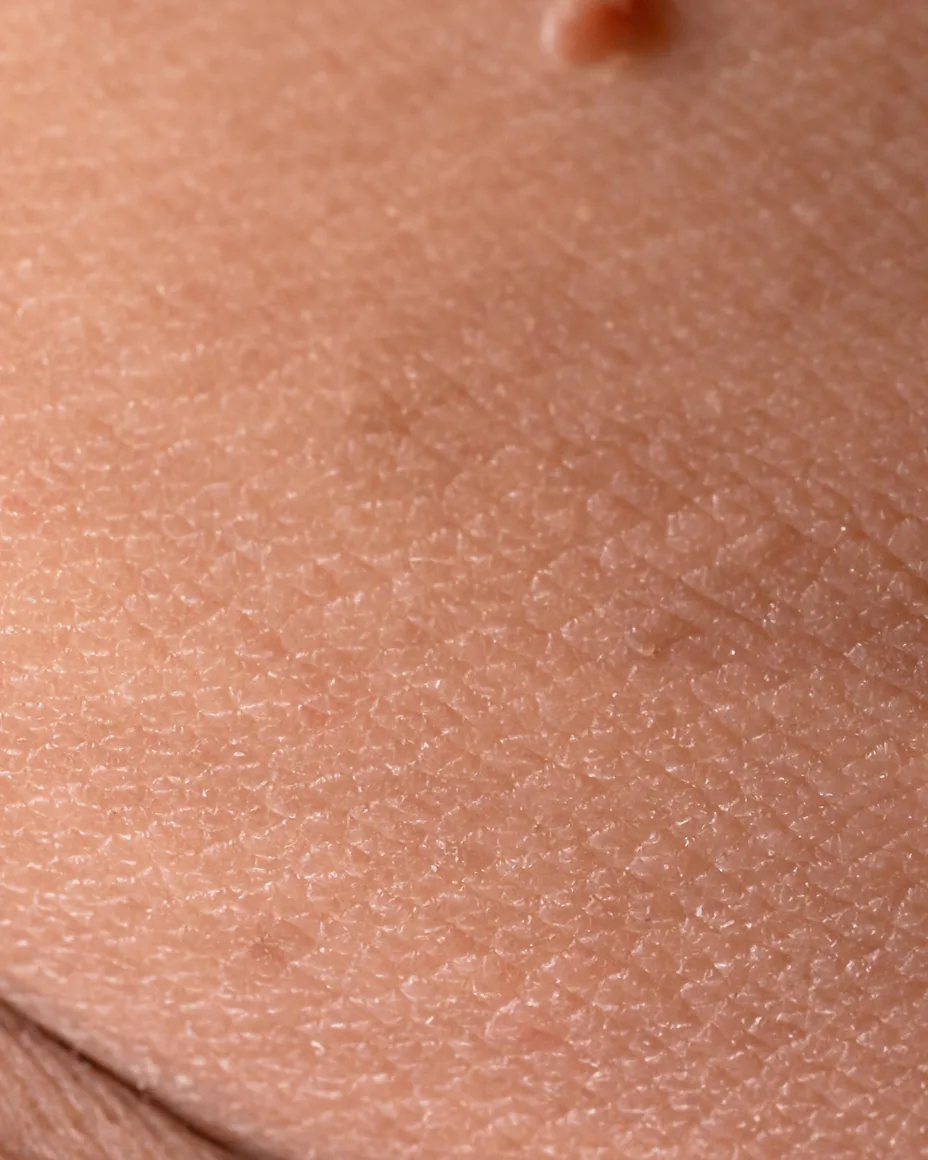
Anyone can look at a small growth and call it a skin tag. A board-certified dermatologist can tell you whether it is one, and can tell it apart from a mole, a wart, a harmless age-related growth and the small number of things that need to go to a laboratory. That distinction is the whole reason to have it looked at, and a photograph does not settle it.
It also means you get told when nothing needs doing, which is most of the time. When you do want one gone, it can be [taken off in the office](/treatments/skin-tag-removal/) at the same visit, by someone who has already confirmed what it is. The alternative is a bad trade: at-home removal products are not recommended, and the FDA warns that they can cause skin injury, infection, scarring and a delayed [skin cancer](/conditions/skin-cancer/) diagnosis, with none of them FDA approved. [3] Ten minutes here is a better trade than any of that.
**Book an appointment if:**
- A growth has changed color, or has more than one color in it
- Something bleeds without having been caught on anything
- A growth is getting steadily larger
- One hurts, catches, or keeps getting irritated by a collar, a strap or a razor
- A growth simply does not look like the others you have
- You want one gone and would rather it was done properly
**No appointment needed if:**
- It has looked exactly the same for years, does not hurt and does not bother you
Skin tags are one of the few things in dermatology where doing nothing is a completely reasonable plan. If you are here because one is annoying you, that is reason enough on its own.
Most people manage skin tags by ignoring them, and that works. Where they are catching or multiplying in one spot, a few small things help.
**Worth doing**
- Softer collars, better-fitting straps and clothing that does not sit in the same crease all day
- Keeping skin folds dry, which takes the moisture out of the friction equation
- Moving a necklace or a watch that keeps landing on the same patch of skin
- Having one removed if it catches on a razor or a zipper, rather than repeatedly nicking it
**Worth knowing**
- Removing a skin tag does not cause more to appear
- They are not contagious. You cannot spread them to yourself or to anyone else [1]
- Occasionally one twists on its stalk, darkens and drops off by itself. It looks alarming and it is harmless
- Ones that appeared during pregnancy sometimes settle on their own afterward
- Do not remove one at home. The FDA warns that at-home removal products cause skin injury, infection, scarring and delayed diagnosis, and none of them is FDA approved [3]
Examination first, removal only if you want it. Pick a treatment to see how it works.
How a visit is handled depends on why the growth is being looked at. A growth that is bleeding, painful or needs identifying is medical care. A growth removed because you would simply rather not have it is not. Our office will go through what applies to you when you book.
Nothing is removed before it has been examined, and you will know which conversation you are in before anything happens.
**Q: Are skin tags dangerous?**
No. They are harmless growths. [1] They do not turn into anything and there is no medical requirement to remove one. People have them taken off because a collar or a necklace catches, or because of how they look, and both are perfectly good reasons.
**Q: What causes them, and who gets them?**
Skin rubbing against skin, jewelry or clothing over time, in a warm fold. [1] Roughly 50 to 60 percent of adults get at least one, they become more likely after the fourth decade, and men and women get them at about the same rate. [2] Family history, pregnancy and loose skin all make them more likely. [1]
**Q: Will they go away on their own?**
Usually not. Occasionally one twists on its stalk, loses its blood supply, turns dark and falls off, which looks dramatic and is harmless. Otherwise a skin tag stays until somebody removes it. Ones that arrived during pregnancy sometimes settle afterward.
**Q: How does a dermatologist remove them?**
Cryosurgery, electrodesiccation or surgical snipping, and one or more can be done during an office visit. [1] Which method suits depends on the size and the site. Skin tag removal walks through the appointment itself.
**Q: Can I remove one at home?**
No, and this is the one firm answer on this page. At-home removal products are not recommended, and the FDA warns they can cause skin injury, infection, scarring and a delayed skin cancer diagnosis. None of them has FDA approval. [3] String, floss and nail scissors carry the same problems plus bleeding you may not be able to stop. [3] An office visit takes minutes.
**Q: Is it definitely a skin tag?**
That is exactly the right question and it is the reason to have it looked at. Several things are small, soft and easy to mistake for one, including moles, warts and a few growths that need a laboratory answer.
1. American Academy of Dermatology Association. "Skin tags: Why they develop, and how to remove them." States that "skin tags are harmless growths that can appear anywhere on your skin, but often develop on the neck, eyelids, or underarms," that they "usually develop where skin has been rubbing against skin, jewelry, or clothing for some time," naming the breasts, eyelids, groin, neck creases and underarms, that they "may be the same color as your skin or darker. Some are pink. Others turn red when irritated," that "people who are overweight, pregnant, or have loose skin are more likely to get skin tags" along with people who have diabetes, metabolic syndrome or a family history, defines metabolic syndrome as high blood pressure, unhealthy blood sugar, excess abdominal fat or unhealthy cholesterol, states that "a dermatologist can quickly and safely remove one or more skin tags during an office visit" using cryosurgery, electrodesiccation or surgical snipping, and that "products that you can use at home to remove skin tags are not recommended." [https://www.aad.org/public/diseases/a-z/skin-tags](https://www.aad.org/public/diseases/a-z/skin-tags) · Medical Organization
2. Pandey A, Saleh HM. "Skin Tag (Acrochordon)." StatPearls. StatPearls Publishing. States that "approximately 50% to 60% of adults develop at least 1 of these harmless growths during their lifetime," with "the likelihood of occurrence increasing after the fourth decade of life," that "by the fifth or sixth decade, approximately two-thirds of individuals may develop acrochordons," that "skin tags affect men and women equally," that "the presence of multiple cutaneous tags is significantly associated with insulin resistance, independent of other risk factors," and that in young women in the second and third decades of life skin tags may be associated with polycystic ovarian syndrome. NBK547724. https://www.ncbi.nlm.nih.gov/books/NBK547724/ · Peer-Reviewed Study
3. American Academy of Dermatology Association. "5 reasons to see a dermatologist for mole, skin tag removal." Gives five reasons: to find and treat skin cancer, to control infection risk, to minimize scarring, to prevent loss of movement due to scarring, and to avoid difficult-to-stop blood loss. States that the FDA warns products sold online for removing moles, skin tags and other growths at home cause "potentially harmful side effects and serious risks," including skin injuries, infection, scarring and delayed cancer diagnosis, and that "none of the products sold for removing moles, skin tags, and other growths at home has received FDA approval." [https://www.aad.org/public/diseases/a-z/mole-skin-tag-removal](https://www.aad.org/public/diseases/a-z/mole-skin-tag-removal) · Medical Organization
Content on this page is for educational purposes and is not a substitute for professional medical advice, diagnosis or treatment. Not every small skin growth is a skin tag; some need to be examined and a few need to be sent to a laboratory. Removal carries the ordinary risks of a minor skin procedure, including bleeding, infection and a small permanent mark. The associations described on this page are associations only and do not establish that any individual has any condition. Healing varies from person to person and by site. Individual results may vary.
```ld+json
{
"@context": "https://schema.org",
"@graph": [
{
"@context": "https://schema.org",
"@type": "MedicalCondition",
"@id": "https://coastaldermaesthetics.com/conditions/skin-tags/#concern",
"name": "Skin Tags",
"url": "https://coastaldermaesthetics.com/conditions/skin-tags/",
"description": "Skin tags are small, soft, harmless growths that turn up where skin rubs against skin or clothing: the neck, underarms, eyelids, upper chest. More than half of adults get at least one. You never have to do anything about them, and if one is catching…",
"image": {
"@type": "ImageObject",
"contentUrl": "https://coastaldermaesthetics.com/wp-content/uploads/2026/07/skin-tags-2x-1024x512.jpg",
"width": 1024,
"height": 512,
"caption": "skin tags on the body"
},
"possibleTreatment": [
{
"@type": "MedicalTherapy",
"name": "Skin Cancer Diagnosis",
"url": "https://coastaldermaesthetics.com/treatments/skin-cancer-diagnosis/"
},
{
"@type": "MedicalTherapy",
"name": "Skin Care Consultations",
"url": "https://coastaldermaesthetics.com/treatments/skin-care-consultations/"
},
{
"@type": "MedicalTherapy",
"name": "Skin Tag Removal",
"url": "https://coastaldermaesthetics.com/treatments/skin-tag-removal/"
}
]
},
{
"@context": "https://schema.org",
"@type": "MedicalWebPage",
"@id": "https://coastaldermaesthetics.com/conditions/skin-tags/#webpage",
"name": "Skin Tags",
"url": "https://coastaldermaesthetics.com/conditions/skin-tags/",
"mainEntity": {
"@id": "https://coastaldermaesthetics.com/conditions/skin-tags/#concern"
},
"lastReviewed": "2026-08-01",
"reviewedBy": {
"@type": "Person",
"@id": "https://coastaldermaesthetics.com/providers/dr-christine-kilcline/#provider",
"name": "Dr. Christine Kilcline",
"url": "https://coastaldermaesthetics.com/providers/dr-christine-kilcline/"
},
"about": [
{
"@type": "MedicalSpecialty",
"name": "Dermatology",
"sameAs": "https://www.wikidata.org/wiki/Q171171"
},
{
"@type": "MedicalCondition",
"name": "Skin tag",
"sameAs": "https://www.wikidata.org/wiki/Q3179593"
}
],
"speakable": {
"@type": "SpeakableSpecification",
"cssSelector": [
".geo-summary"
]
}
},
{
"@context": "https://schema.org",
"@type": "BreadcrumbList",
"itemListElement": [
{
"@type": "ListItem",
"position": 1,
"name": "Home",
"item": {
"@id": "https://coastaldermaesthetics.com/",
"@type": "WebSite",
"name": "Home"
}
},
{
"@type": "ListItem",
"position": 2,
"name": "Concerns",
"item": {
"@id": "https://coastaldermaesthetics.com/conditions/",
"@type": "CollectionPage",
"name": "Concerns"
}
},
{
"@type": "ListItem",
"position": 3,
"name": "Skin Tags",
"item": "https://coastaldermaesthetics.com/conditions/skin-tags/"
}
]
},
{
"@context": "https://schema.org",
"@type": "Question",
"name": "Skin Tags",
"acceptedAnswer": {
"@type": "Answer",
"text": "A skin tag is a small, soft, harmless growth attached by a narrow stalk, which develops where skin has been rubbing against skin, jewelry or clothing. They appear most often on the neck, eyelids and underarms. Skin tags are examined and removed at Coastal Dermatology + Aesthetics in San Luis Obispo."
},
"isPartOf": {
"@id": "https://coastaldermaesthetics.com/conditions/skin-tags/#webpage"
},
"url": "https://coastaldermaesthetics.com/conditions/skin-tags/"
},
{
"@context": "https://schema.org",
"@type": "Review",
"reviewBody": "Services are prompt, friendly, professional and most of all comfortable...it was an extraordinary experience.",
"itemReviewed": {
"@type": "Organization",
"@id": "https://coastaldermaesthetics.com/#organization",
"name": "Coastal Dermatology + Aesthetics"
},
"author": {
"@type": "Person",
"name": "Kathleen W."
},
"reviewRating": {
"@type": "Rating",
"ratingValue": 5,
"bestRating": 5
}
},
{
"@context": "https://schema.org",
"@type": "FAQPage",
"mainEntity": [
{
"@type": "Question",
"name": "Are skin tags dangerous?",
"acceptedAnswer": {
"@type": "Answer",
"text": "No. They are harmless growths. [1] They do not turn into anything and there is no medical requirement to remove one. People have them taken off because a collar or a necklace catches, or because of how they look, and both are perfectly good reasons.
"
}
},
{
"@type": "Question",
"name": "What causes them, and who gets them?",
"acceptedAnswer": {
"@type": "Answer",
"text": "Skin rubbing against skin, jewelry or clothing over time, in a warm fold. [1] Roughly 50 to 60 percent of adults get at least one, they become more likely after the fourth decade, and men and women get them at about the same rate. [2] Family history, pregnancy and loose skin all make them more likely. [1]
"
}
},
{
"@type": "Question",
"name": "Will they go away on their own?",
"acceptedAnswer": {
"@type": "Answer",
"text": "Usually not. Occasionally one twists on its stalk, loses its blood supply, turns dark and falls off, which looks dramatic and is harmless. Otherwise a skin tag stays until somebody removes it. Ones that arrived during pregnancy sometimes settle afterward.
"
}
},
{
"@type": "Question",
"name": "How does a dermatologist remove them?",
"acceptedAnswer": {
"@type": "Answer",
"text": "Cryosurgery, electrodesiccation or surgical snipping, and one or more can be done during an office visit. [1] Which method suits depends on the size and the site. Skin tag removal walks through the appointment itself.
"
}
},
{
"@type": "Question",
"name": "Can I remove one at home?",
"acceptedAnswer": {
"@type": "Answer",
"text": "No, and this is the one firm answer on this page. At-home removal products are not recommended, and the FDA warns they can cause skin injury, infection, scarring and a delayed skin cancer diagnosis. None of them has FDA approval. [3] String, floss and nail scissors carry the same problems plus bleeding you may not be able to stop. [3] An office visit takes minutes.
"
}
},
{
"@type": "Question",
"name": "Is it definitely a skin tag?",
"acceptedAnswer": {
"@type": "Answer",
"text": "That is exactly the right question and it is the reason to have it looked at. Several things are small, soft and easy to mistake for one, including moles, warts and a few growths that need a laboratory answer.
"
}
}
]
}
]
}
```