---
title: "Infantile Hemangiomas"
---
## A birthmark that grows first and fades second
An infantile hemangioma is a birthmark made of blood vessels. In the classification system used for vascular birthmarks it is a benign vascular tumor, which is a different category from a vascular malformation such as [a port-wine stain, which behaves differently](/conditions/vascular-anomalies/). [9] The practical difference is the one that matters to parents: a hemangioma grows and then goes, and a malformation stays.
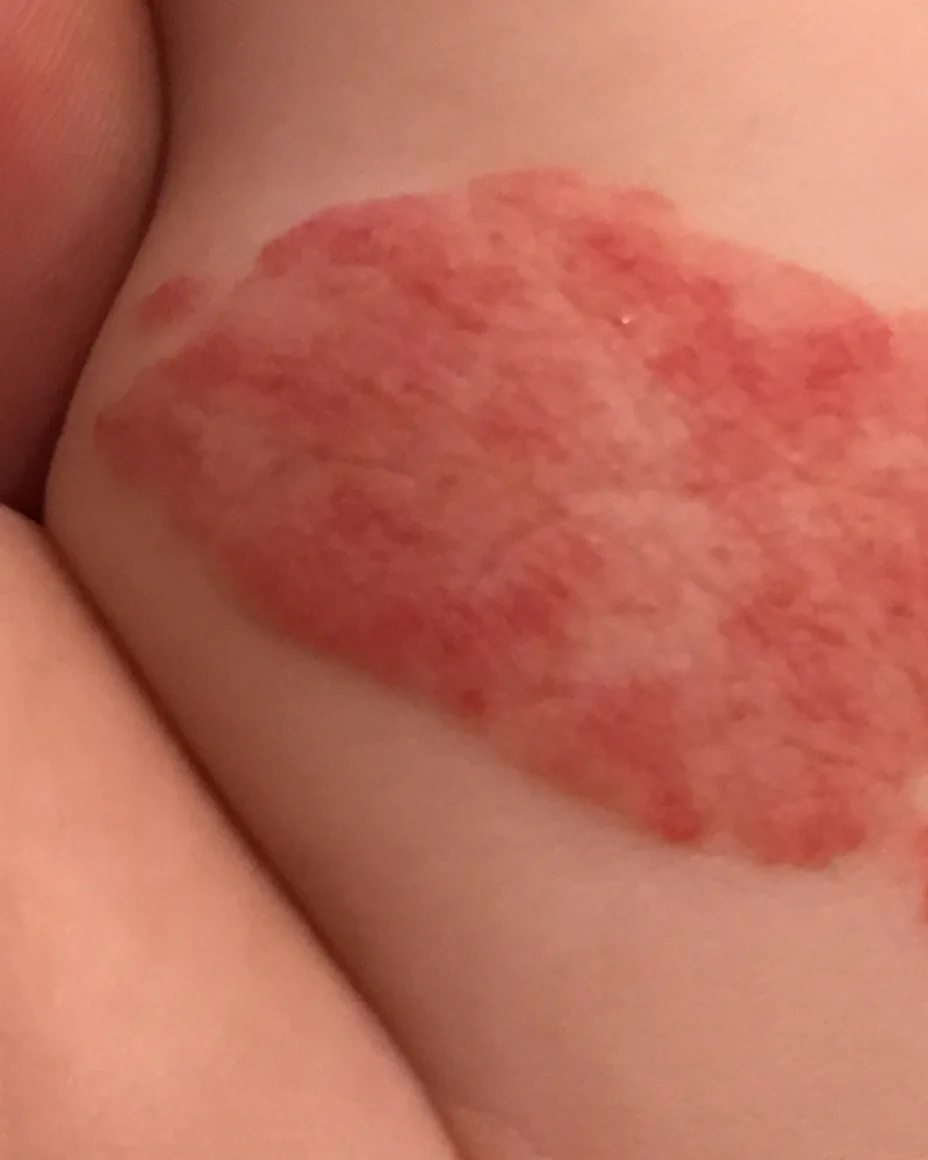
**The superficial type looks like a strawberry-colored lump that feels firm and rubbery.** [1] Most appear on the head or neck, though they can develop anywhere on the skin or on moist tissue inside the mouth. [1] **The deep type sits further down**, appears skin colored or bluish-purple, and feels warm and firm. [1]
**The growth phase is short and it is the part that alarms people.** A superficial hemangioma tends to grow quickly, usually until the child is 4 to 6 months old, and some grow for longer. [1] A deep one can grow for up to a year. [1] Watching a birthmark get bigger week over week is frightening if nobody has told you it was going to happen, and knowing it is coming is most of what makes it manageable. [4]
**Then it turns around.** In time, all of them shrink. [1] The color changes toward slate gray and the lump begins to soften. [1] About 10% of superficial hemangiomas are gone by age 1 and about 90% by age 10. [1] Deep ones run slower, with about half gone by age 5 and nearly 90% by age 10. [1]
Before 6 months
When treatment usually begins for a hemangioma that needs it. Because the birthmark starts growing early, treatment often begins before a child is 6 months old. [3] The decision is made during the growth phase, not after it.
## Who gets them, and why
### It is nobody's doing
Hemangiomas are among the most common birthmarks, appearing in between 3% and 10% of babies. [4] Nothing a parent did or did not do during pregnancy causes one. The pattern is statistical rather than behavioral.
### The groups where they turn up more
They are more common in babies born prematurely, in babies weighing under about five and a half pounds at birth, in girls, in white infants, and in multiples. [5] More than one hemangioma on the same child is not unusual.
### Why a dermatologist rather than watchful waiting alone
Most birthmarks are harmless, and it is still worth having one examined. [4] What looks like a birthmark can be the first sign of a skin condition, and some birthmarks are a sign that something is going on inside a baby's body. [4] Knowing which one you are looking at is what turns a frightening few months into an expected few months.
About 90%
Superficial hemangiomas that have gone by age 10. [1] About 10% are gone by age 1, and the rest fade in between. Deep ones follow a slower version of the same curve. [1]
## The timeline, and where the decision sits inside it
Almost every question parents ask about a hemangioma is really a question about timing. Here is the whole arc in one place.
| Stage | Roughly when | What is happening |
| --- | --- | --- |
| Appears | At birth or in the first weeks | A mark that may be faint at first [1] |
| Grows | Usually until 4 to 6 months, sometimes longer. Deep ones up to a year | The fast phase, and the one that worries people [1] |
| Treatment decision, if there is one | **Often before 6 months** | Treatment starts while it is still growing, which is what makes early evaluation matter [3] |
| Plateau and turn | Through the first year | Growth stops. Color begins shifting toward slate gray and the lump softens [1] |
| Fades | Years, not months | About 10% gone by age 1, about 90% by age 10 [1] |
| What is left | After it has gone | Often little evidence it was there. Sometimes excess fibrofatty tissue, fine surface vessels or loose skin [1] [7] |
**The reason the timing matters is simple.** A hemangioma that is going to need treatment needs it during the growth phase, and the growth phase is mostly over by six months. [1] [3] An appointment at eight weeks and an appointment at eight months are two different conversations. **Have a dermatologist examine a birthmark as soon as you notice it, so you know what type it is and whether it needs treatment.** [2]
**Watching it is a legitimate plan and it is the usual one.** Most hemangiomas fade without treatment, and formally deciding to watch a birthmark is one of the options a dermatologist will put on the table. [2] The value of the appointment is that watching becomes a choice with a timeline attached rather than a default.
**What treatment looks like when it is needed.** An oral beta blocker called propranolol is the first and only medication approved by the FDA for this birthmark. [3] It can prevent a hemangioma from growing and can shrink one that is growing. [2] The birthmark may feel softer within 24 hours of the first dose, and treatment usually runs six months or longer to keep it from returning. [3] A related medication, timolol, comes as a liquid applied to the skin and is used at a lower dose than it would be for its original purpose. [2] Corticosteroids and surgery are used in specific situations. [2] **Pulsed dye lasers are safely used on infants and children**, including for hemangioma birthmarks. [6]
## Where it is matters more than how big it is
| Location | Why it changes the plan |
| --- | --- |
| Near the eye | It can grow over the eye quickly, which can cause a serious eye problem [3] |
| Near the mouth or lip | It can grow over the lips and make feeding or breathing difficult [3] |
| Near the nose | Treatment can prevent it from covering that part of the face [2] |
| In the groin or diaper area | Treatment can prevent pain later on [2] |
| Large or in a highly visible place | Treatment may be recommended where the birthmark affects appearance enough to matter to the child later [2] |
| Anywhere it has broken down | As a hemangioma shrinks the skin over it can break down and become painful. That is a call, not a wait [1] |
**A small hemangioma on a thigh and a small hemangioma on an eyelid are not the same clinical situation**, and that is the single most useful thing to understand before an appointment. Size gets the attention. Position drives the decision.
> Always have had a great experience here.
— **Alyssa B.**, San Luis Obispo (5 out of 5 stars)
The Coastal difference
## The laser for this is here, and it is cleared for children
[The pulsed dye laser we use](/treatments/vbeam-photorejuvenation/) is a Candela Vbeam®. Its FDA clearance covers a pediatric indication in plain terms: treatment of cutaneous capillary malformations, also known as port wine stains, and infantile hemangiomas and congenital hemangiomas. [8] That is the device sitting in this building, cleared for exactly this use. Pulsed dye lasers are safely used on infants and children. [6]
**The alternative for most Central Coast families is a drive.** The vascular birthmark programs are at the university children's hospitals, and they are excellent and they are hours away. Having a board-certified dermatologist who can look at a birthmark in San Luis Obispo, tell you what it is, tell you whether the timeline needs anything from you, and treat it here when treatment is warranted is a different proposition from booking a day trip to find out that watching it is the answer.
The same device handles vascular concerns in adults, including [the fine surface vessels on a face or leg](/conditions/spider-veins/). A birthmark that is [pigmented rather than vascular](/conditions/moles/) is a separate evaluation, and telling the two apart is the first thing that happens at the appointment.
Cleared for children
The pulsed dye laser here carries an FDA clearance naming port wine stains and infantile hemangiomas in the pediatric population. [8] Devices are cleared rather than approved, and this one is cleared for this.
## When to see a dermatologist
**Call sooner if the birthmark:**
- Is near the eye, on or near the lips or mouth, or near the nose [2] [3]
- Is growing quickly and is large, or is in a place that is hard to keep clean
- Has broken down, opened, or is causing the baby pain [1]
- Is in the groin or diaper area [2]
- Is one of several
Seeing a birthmark grow quickly is unsettling, and knowing it is going to happen and what to watch for is what settles it. [4] A dermatologist can also tell you whether treatment is recommended at all. [4]
## What to expect while you wait it out
**During the growth phase**
- Expect it to get bigger before it turns around. That is the normal course, usually through 4 to 6 months [1]
- Photograph it in the same light, from the same distance, every couple of weeks. It makes the plateau obvious when it arrives
- Keep the area clean and protected from rubbing, particularly in the diaper area and under collars
- If the surface breaks down, call rather than treating it at home. That can be painful and it is worth seeing [1]
**During the fading years**
- Color shifts toward slate gray and the lump softens before it flattens [1]
- The process runs in years. About 10% of superficial hemangiomas are gone by age 1, about 90% by age 10 [1]
- Deep ones are slower, with about half gone by age 5 [1]
**What can be left behind**
- Often little evidence that it was ever there [1]
- The skin may return to normal, and often there are residual changes: excess fibrofatty tissue, fine surface vessels, or loose skin [7]
- Around 8% leave a cosmetic change that warrants some intervention [7]
- Residual changes are treatable, and that conversation happens after involution rather than during it
## Treatments we offer
Evaluation first, then either a plan to watch it or a plan to treat it. Pick a treatment to see how it works.
- [Skin Care Consultations](https://coastaldermaesthetics.com/treatments/skin-care-consultations/)
- [VBeam Photorejuvenation](https://coastaldermaesthetics.com/treatments/vbeam-photorejuvenation/)
## What treatment costs
Evaluation and treatment of an infantile hemangioma are medical care rather than a cosmetic service, and are handled differently from the aesthetic treatments on this site. Our office will go through what applies to you when you book.
Where laser treatment is part of the plan, it is being used for a medical indication, and our office will explain how that is handled before anything is scheduled.
How common
Between 3% and 10% of babies are born with a hemangioma [4]
How long it grows
Usually until a child is 4 to 6 months old, and some grow longer [1]
When it fades
About 10% are gone by age 1 and about 90% by age 10 [1]
When treatment starts, if it is needed
Often before a child is 6 months old, because it begins while the birthmark is still growing [3]
## Infantile hemangioma frequently asked questions
**Q: Will it go away on its own?**
Almost certainly, and it will take years rather than months. All of them shrink in time. [1] About 10% of superficial hemangiomas are gone by age 1 and about 90% by age 10, and deep ones follow a slower version of the same curve, with about half gone by age 5. [1]
**Q: It is getting bigger. Is that normal?**
Yes, and it is the part nobody warns parents about. A superficial hemangioma tends to grow quickly, usually until the child is 4 to 6 months old, and some grow longer. A deep one can grow for up to a year. [1] Growth stops, and then the color starts shifting toward slate gray and the lump softens. [1]
**Q: When does a hemangioma need treatment?**
Mostly it is about location. Near the eye it can grow over the eye and cause a serious eye problem. Near the mouth it can grow over the lips and make feeding or breathing difficult. [3] In the groin, treatment can prevent pain later. Large or highly visible birthmarks are sometimes treated for that reason alone. [2] And if the surface breaks down as it shrinks, that needs to be seen. [1]
**Q: If it needs treatment, when does that start?**
Early. Because this birthmark starts growing early in life, treatment often begins before a child is 6 months old. [3] That is the reason to have a birthmark examined as soon as you notice it rather than at the next well-child visit. [2]
**Q: What is the treatment?**
Usually a medication. Propranolol, an oral beta blocker, is the first and only medication approved by the FDA for this birthmark. [3] It can prevent growth and shrink a hemangioma that is growing. [2] The birthmark may feel softer within 24 hours of the first dose, and a course usually runs six months or longer. [3] Timolol, applied to the skin as a liquid, is used in some cases. [2] Corticosteroids, surgery and laser treatment are used in specific situations. [2] [6]
**Q: Can a laser be used on a baby?**
Yes. Pulsed dye lasers are safely used on infants and children for a range of conditions including hemangioma birthmarks. [6] The pulsed dye laser in this office carries an FDA clearance that names infantile hemangiomas in the pediatric population. [8]
**Q: Will anything be left behind?**
Sometimes. Often there is little evidence a hemangioma was ever there. [1] The skin may return to normal, and often there are residual changes, usually excess fibrofatty tissue, fine surface vessels or loose skin. [7] Around 8% leave a cosmetic change that warrants some intervention. [7] Those are addressed after it has resolved, not during.
**Q: Do I need a referral?**
Yes. This is medical dermatology, and the practice is currently accepting new medical patients by referral from your primary care physician. Once you have that, call the office and we will get you in.
3% to 10%
Babies born with a hemangioma. [4] It is one of the most common birthmarks there is, which is worth knowing when it feels like the only one.
## Offered at
- [San Luis Obispo](https://coastaldermaesthetics.com/locations/coastal-dermatology-aesthetics/)
## Noticed a birthmark? Request an appointment
## Sources and medical review
1. American Academy of Dermatology Association. "Birthmarks: Signs and symptoms." Describes the superficial infantile hemangioma, called a strawberry hemangioma, as a birthmark that "usually looks like a strawberry-colored lump that feels firm and rubbery," notes that "most occur on the head or neck, but this birthmark can develop anywhere on the skin or moist tissue inside the mouth or anus," and that "this birthmark tends to grow quickly, usually until the child is 4 to 6 months old." Describes the deep or cavernous type as a birthmark that "looks like a lump that sits deep in the skin," which "can grow quickly and grow for up to a year." States that "in time, all strawberry hemangiomas shrink," that the color changes to slate gray as it shrinks, that "about 10% disappear by the age 1 and 90% are gone by the time a child is 10 years old," and for the deep type that nearly 90% "will be gone by the time a child is 10 years old" with about half gone by age 5. Notes that when the birthmark shrinks "the skin may break down, causing pain," and that a superficial hemangioma "usually goes away on its own, leaving little evidence that it was ever there," while a deep one "can leave a light spot or scar on the skin." [https://www.aad.org/public/diseases/a-z/birthmarks-symptoms](https://www.aad.org/public/diseases/a-z/birthmarks-symptoms) · Medical Organization
2. American Academy of Dermatology Association. "Birthmarks: Diagnosis and treatment." States: "Have a dermatologist examine a birthmark as soon as you notice it, so you know what type of birthmark your child has and whether it needs treatment." Lists watching the birthmark as a formal option, noting it "can be an effective approach for a strawberry hemangioma, a type of birthmark that can grow quickly." On location, states that "if one appears near your child's eye, mouth, or nose, treatment can prevent it from covering that part of your child's body," and that "in the groin area, treatment can prevent pain later on"; on size, that "if the birthmark affects the child's appearance and could cause problems with self-esteem, your dermatologist may recommend treatment." Describes propranolol as a medication that "can effectively prevent a hemangioma from growing" and "can also shrink a growing hemangioma," which "has been approved to treat this type of birthmark," and timolol as a medication that "can also help shrink a growing hemangioma," which "comes in liquid form" and is prescribed at "a lower dose of the medication than would be used to treat glaucoma." Also lists corticosteroids, interferon, surgery and makeup. [https://www.aad.org/public/diseases/a-z/birthmarks-treatment](https://www.aad.org/public/diseases/a-z/birthmarks-treatment) · Medical Organization
3. American Academy of Dermatology Association. "Heart medicine can clear strawberry birthmarks." States: "Since this birthmark starts to grow early in life, treatment often begins before a child is 6 months old," and "you want to treat your child when the birthmark starts to grow. This helps prevent a serious health problem." States that "propranolol is the first and only FDA-approved treatment for this birthmark," that "within 24 hours of giving your child the first dose, the birthmark may feel softer" and "soon after, you may see the birthmark start to shrink," and that "you may need to give your child propranolol for 6 months or longer. This helps prevent the birthmark from returning." On location, states that "if a hemangioma appears near your child's eye, it could quickly cover the eye. This could cause a serious eye problem," and that "near the mouth, this birthmark can grow over the lips," making it difficult for a baby to eat or breathe. [https://www.aad.org/diseases/a-z/heart-medicine-can-clear-strawberry-birthmarks](https://www.aad.org/diseases/a-z/heart-medicine-can-clear-strawberry-birthmarks) · Medical Organization
4. American Academy of Dermatology Association. "Birthmarks: Overview." States that "it's estimated that between 3% and 10% of babies are born with a type of birthmark called a hemangioma," that "one thing that most birthmarks have in common is that they're harmless. Yet, if you see a birthmark on your child's skin, it's wise to have a dermatologist examine it," that "what you think is a birthmark could be the first sign of a skin disease," that "some birthmarks are a sign that something is going on inside your baby's body," and that "it's also possible that your baby has a harmless birthmark that will grow quickly. Seeing a birthmark grow quickly can be scary. Knowing this will happen and learning what to watch for can help put your mind at ease." [https://www.aad.org/public/diseases/a-z/birthmarks-overview](https://www.aad.org/public/diseases/a-z/birthmarks-overview) · Medical Organization
5. American Academy of Dermatology Association. "Birthmarks: Causes." Lists factors associated with a higher likelihood of a hemangioma, including premature birth, birth weight under about five and a half pounds, female sex, white race, and multiple births. [https://www.aad.org/public/diseases/a-z/birthmarks-causes](https://www.aad.org/public/diseases/a-z/birthmarks-causes) · Medical Organization
6. American Academy of Dermatology Association. "Skin conditions lasers treat." States that "some lasers, such as pulsed dye lasers and intense pulsed light therapy, are safely used on infants and children to treat a wide range of conditions, including port wine stain and hemangioma birthmarks." [https://www.aad.org/public/diseases/a-z/skin-conditions-lasers-treat](https://www.aad.org/public/diseases/a-z/skin-conditions-lasers-treat) · Medical Organization
7. StatPearls, National Center for Biotechnology Information. "Infantile Hemangioma." States that after involution "the skin may return to normal, but often there are residual changes (excessive fibrofatty tissue, telangiectasia, skin laxity)," and that "approximately 8% of IH leave cosmetic disfigurement and require some intervention." States that "ulceration is the most common complication and occurs in up to 10% of cases," with higher risk in the anogenital area, lower lip, axilla and neck. [https://www.ncbi.nlm.nih.gov/books/NBK538232/](https://www.ncbi.nlm.nih.gov/books/NBK538232/) · Medical Reference
8. U.S. Food and Drug Administration. 510(k) Premarket Notification K230990, "Candela Vbeam Family of Pulsed Dye Lasers (Vbeam Prima, Vbeam Perfecta)," Candela Corporation, decision date June 1, 2023, product code GEX, regulation 878.4810, Class 2, found substantially equivalent. The cleared indications include, at 595 nm, a pediatric population indication for "treatment of cutaneous capillary malformations, also known as port wine stains (PWS), and infantile hemangiomas (IH) / congenital hemangiomas." [https://www.accessdata.fda.gov/cdrh_docs/pdf23/K230990.pdf](https://www.accessdata.fda.gov/cdrh_docs/pdf23/K230990.pdf) · Government Organization
9. International Society for the Study of Vascular Anomalies. "ISSVA Classification of Vascular Anomalies (2018)." Divides vascular anomalies into vascular tumors and vascular malformations, and classifies "infantile hemangioma / hemangioma of infancy" as a benign vascular tumor, separately from capillary malformations such as port-wine stain. [https://www.issva.org/UserFiles/file/ISSVA-Classification-2018.pdf](https://www.issva.org/UserFiles/file/ISSVA-Classification-2018.pdf) · Medical Organization
Content on this page is for educational purposes and is not a substitute for professional medical advice, diagnosis or treatment. Infantile hemangiomas vary widely, and the descriptions here are general rather than specific to any child. Medications used to treat hemangiomas, including propranolol and timolol, carry their own risks and monitoring requirements, which are discussed before treatment begins. Laser treatment is used in selected cases. FDA clearance of a device describes the uses for which the device may be marketed and is not a statement about any individual outcome. Individual results may vary.
```ld+json
{
"@context": "https://schema.org",
"@graph": [
{
"@context": "https://schema.org",
"@type": "MedicalCondition",
"@id": "https://coastaldermaesthetics.com/conditions/infantile-hemangiomas/#concern",
"name": "Infantile Hemangiomas",
"url": "https://coastaldermaesthetics.com/conditions/infantile-hemangiomas/",
"description": "Most hemangiomas grow for a few months, stop, and then fade over years without any treatment at all. A minority need treating, and those need it early, because the decision point arrives while the birthmark is still growing rather than after.",
"image": {
"@type": "ImageObject",
"contentUrl": "https://coastaldermaesthetics.com/wp-content/uploads/2026/07/infantile-hemangiomas-2x-1024x512.jpg",
"width": 1024,
"height": 512,
"caption": "Mom lying next to her baby on a bed"
},
"possibleTreatment": [
{
"@type": "MedicalTherapy",
"name": "Skin Care Consultations",
"url": "https://coastaldermaesthetics.com/treatments/skin-care-consultations/"
},
{
"@type": "MedicalTherapy",
"name": "VBeam Photorejuvenation",
"url": "https://coastaldermaesthetics.com/treatments/vbeam-photorejuvenation/"
}
]
},
{
"@context": "https://schema.org",
"@type": "MedicalWebPage",
"@id": "https://coastaldermaesthetics.com/conditions/infantile-hemangiomas/#webpage",
"name": "Infantile Hemangiomas",
"url": "https://coastaldermaesthetics.com/conditions/infantile-hemangiomas/",
"mainEntity": {
"@id": "https://coastaldermaesthetics.com/conditions/infantile-hemangiomas/#concern"
},
"lastReviewed": "2026-08-01",
"reviewedBy": {
"@type": "Person",
"@id": "https://coastaldermaesthetics.com/providers/dr-christine-kilcline/#provider",
"name": "Dr. Christine Kilcline",
"url": "https://coastaldermaesthetics.com/providers/dr-christine-kilcline/"
},
"mentions": [
{
"@type": "MedicalCondition",
"name": "Hemangioma",
"sameAs": "https://www.wikidata.org/wiki/Q861028"
}
],
"about": [
{
"@type": "MedicalSpecialty",
"name": "Dermatology",
"sameAs": "https://www.wikidata.org/wiki/Q171171"
},
{
"@type": "MedicalCondition",
"name": "Infantile hemangioma",
"sameAs": "https://www.wikidata.org/wiki/Q52771370"
}
],
"speakable": {
"@type": "SpeakableSpecification",
"cssSelector": [
".geo-summary"
]
}
},
{
"@context": "https://schema.org",
"@type": "BreadcrumbList",
"itemListElement": [
{
"@type": "ListItem",
"position": 1,
"name": "Home",
"item": {
"@id": "https://coastaldermaesthetics.com/",
"@type": "WebSite",
"name": "Home"
}
},
{
"@type": "ListItem",
"position": 2,
"name": "Concerns",
"item": {
"@id": "https://coastaldermaesthetics.com/conditions/",
"@type": "CollectionPage",
"name": "Concerns"
}
},
{
"@type": "ListItem",
"position": 3,
"name": "Infantile Hemangiomas",
"item": "https://coastaldermaesthetics.com/conditions/infantile-hemangiomas/"
}
]
},
{
"@context": "https://schema.org",
"@type": "Question",
"name": "Infantile Hemangiomas",
"acceptedAnswer": {
"@type": "Answer",
"text": "An infantile hemangioma is a common birthmark made of blood vessels that grows quickly in the first months of life and then shrinks over years. Most need no treatment. Hemangiomas are evaluated and treated at Coastal Dermatology + Aesthetics in San Luis Obispo."
},
"isPartOf": {
"@id": "https://coastaldermaesthetics.com/conditions/infantile-hemangiomas/#webpage"
},
"url": "https://coastaldermaesthetics.com/conditions/infantile-hemangiomas/"
},
{
"@context": "https://schema.org",
"@type": "Review",
"reviewBody": "Always have had a great experience here.",
"itemReviewed": {
"@type": "Organization",
"@id": "https://coastaldermaesthetics.com/#organization",
"name": "Coastal Dermatology + Aesthetics"
},
"author": {
"@type": "Person",
"name": "Alyssa B."
},
"reviewRating": {
"@type": "Rating",
"ratingValue": 5,
"bestRating": 5
}
},
{
"@context": "https://schema.org",
"@type": "FAQPage",
"mainEntity": [
{
"@type": "Question",
"name": "Will it go away on its own?",
"acceptedAnswer": {
"@type": "Answer",
"text": "Almost certainly, and it will take years rather than months. All of them shrink in time. [1] About 10% of superficial hemangiomas are gone by age 1 and about 90% by age 10, and deep ones follow a slower version of the same curve, with about half gone by age 5. [1]
"
}
},
{
"@type": "Question",
"name": "It is getting bigger. Is that normal?",
"acceptedAnswer": {
"@type": "Answer",
"text": "Yes, and it is the part nobody warns parents about. A superficial hemangioma tends to grow quickly, usually until the child is 4 to 6 months old, and some grow longer. A deep one can grow for up to a year. [1] Growth stops, and then the color starts shifting toward slate gray and the lump softens. [1]
"
}
},
{
"@type": "Question",
"name": "When does a hemangioma need treatment?",
"acceptedAnswer": {
"@type": "Answer",
"text": "Mostly it is about location. Near the eye it can grow over the eye and cause a serious eye problem. Near the mouth it can grow over the lips and make feeding or breathing difficult. [3] In the groin, treatment can prevent pain later. Large or highly visible birthmarks are sometimes treated for that reason alone. [2] And if the surface breaks down as it shrinks, that needs to be seen. [1]
"
}
},
{
"@type": "Question",
"name": "If it needs treatment, when does that start?",
"acceptedAnswer": {
"@type": "Answer",
"text": "Early. Because this birthmark starts growing early in life, treatment often begins before a child is 6 months old. [3] That is the reason to have a birthmark examined as soon as you notice it rather than at the next well-child visit. [2]
"
}
},
{
"@type": "Question",
"name": "What is the treatment?",
"acceptedAnswer": {
"@type": "Answer",
"text": "Usually a medication. Propranolol, an oral beta blocker, is the first and only medication approved by the FDA for this birthmark. [3] It can prevent growth and shrink a hemangioma that is growing. [2] The birthmark may feel softer within 24 hours of the first dose, and a course usually runs six months or longer. [3] Timolol, applied to the skin as a liquid, is used in some cases. [2] Corticosteroids, surgery and laser treatment are used in specific situations. [2] [6]
"
}
},
{
"@type": "Question",
"name": "Can a laser be used on a baby?",
"acceptedAnswer": {
"@type": "Answer",
"text": "Yes. Pulsed dye lasers are safely used on infants and children for a range of conditions including hemangioma birthmarks. [6] The pulsed dye laser in this office carries an FDA clearance that names infantile hemangiomas in the pediatric population. [8]
"
}
},
{
"@type": "Question",
"name": "Will anything be left behind?",
"acceptedAnswer": {
"@type": "Answer",
"text": "Sometimes. Often there is little evidence a hemangioma was ever there. [1] The skin may return to normal, and often there are residual changes, usually excess fibrofatty tissue, fine surface vessels or loose skin. [7] Around 8% leave a cosmetic change that warrants some intervention. [7] Those are addressed after it has resolved, not during.
"
}
},
{
"@type": "Question",
"name": "Do I need a referral?",
"acceptedAnswer": {
"@type": "Answer",
"text": "Yes. This is medical dermatology, and the practice is currently accepting new medical patients by referral from your primary care physician. Once you have that, call the office and we will get you in.
"
}
}
]
}
]
}
```